Why Choose WPC Cladding for Global Building Projects?
Global construction is under pressure to reduce emissions, extend service life, and control maintenance costs. The United Nations Environment Programme’s 2023 Global Status Report states that buildings and construction produced 37% of global energy and process-related carbon emissions in 2022. This figure makes material selection more than an aesthetic decision. It becomes a long-term performance question.
WPC Cladding combines wood fibres with polymer resins, creating a textured façade system that can resist moisture, insects, and routine staining. Grand View Research valued the global wood-plastic composites market at approximately USD 7.31 billion in 2022. It also projected a 7.5% compound annual growth rate from 2023 to 2030. These figures suggest strong market confidence, although they do not guarantee success on every building.
Professor Mohini Sain, a widely recognised WPC researcher, has said, “WPCs are a unique class of materials.” His observation matters because WPC Cladding should not be treated as ordinary timber or plastic. Its performance depends on fibre content, resin selection, drainage design, ventilation, and installation quality. A coastal hotel needs different protection from a dry inland school. Fire classification must also be checked against local building codes.
The material looks practical.
However, no cladding system is maintenance-free. Colour fading, thermal movement, recycled content, and end-of-life recovery still require honest evaluation. Product datasheets, verified environmental declarations, and independent test reports offer stronger evidence than attractive samples alone. The best global projects choose WPC Cladding after examining climate, regulations, installer experience, and the building’s full service life.
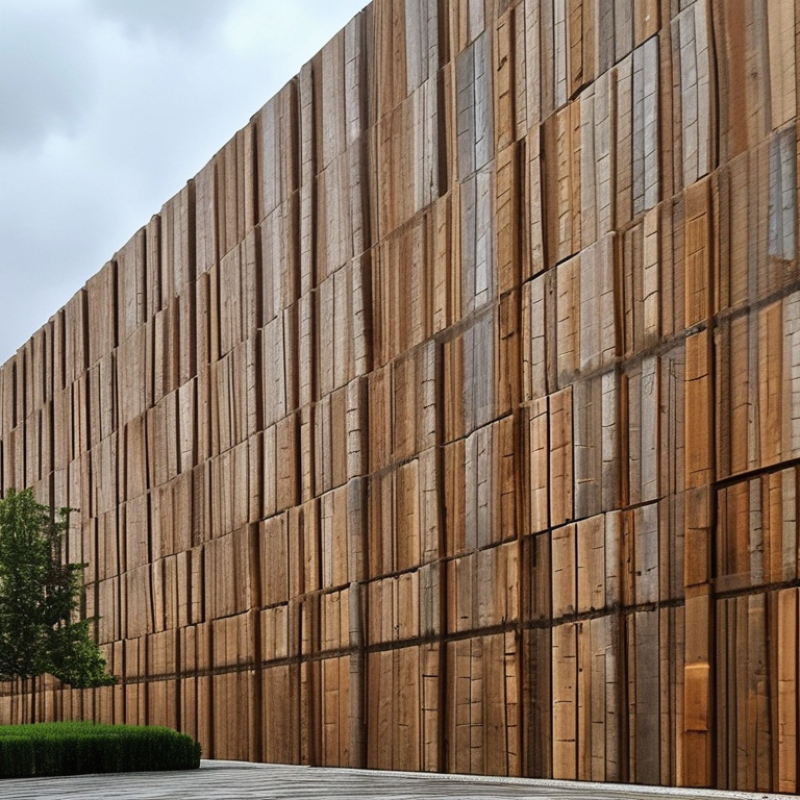
WPC cladding means wood-plastic composite cladding. It combines wood fibres or flour with thermoplastic polymers, such as polyethylene or polypropylene. Manufacturers may also add pigments, stabilisers, and bonding agents. The exact recipe varies.
Production begins with drying and blending the wood particles. The mixture is heated until the polymer softens around the fibres. An extruder then pushes this compound through a shaped opening, creating boards or panels. Cooling sets the profile. Surface brushing, embossing, or film coating can add realistic grain and colour. Some products use recycled materials, but the percentage should be verified through technical documents.
On a building site, WPC panels feel more consistent than many untreated timber boards. They resist moisture better when properly designed and installed. However, they are not maintenance-free or universally suitable. Dark colours can absorb strong sunlight and expand noticeably. Installers need correct gaps, fasteners, drainage, and rear ventilation. I have seen small installation shortcuts create uneven joints later.
Performance also depends on the polymer, fibre ratio, additives, and local climate. A coastal project may require different testing from a dry inland building. Fire classification, slip-related risks, emissions, and recycling arrangements deserve careful review before specification. WPC can support durable façades, but honest material selection matters more than attractive grain alone.
WPC cladding combines wood fibres with thermoplastic polymers, creating a practical exterior skin for varied climates. Its main advantage is moisture resistance. Unlike untreated timber, properly manufactured WPC does not readily absorb rainwater or support surface decay. EN 15534 testing evaluates water absorption, swelling, and dimensional change. These measurements matter on façades exposed to repeated wetting and drying.
Dimensional stability is another key performance feature. Panels expand and contract with temperature, so installers need correct gaps, fasteners, and ventilation channels. The weak point is often installation, not the board itself. In coastal areas, concealed fixings should resist corrosion, while drainage details should prevent trapped water. The 2023 Global Status Report for Buildings and Construction links buildings with 34% of global energy demand and 37% of energy-related emissions. A durable cladding system can support longer replacement cycles, although it does not solve operational energy use alone.
Maintenance is usually lighter than painted wood. Routine washing can remove dust, algae, and airborne deposits from textured surfaces. Still, “maintenance-free” is an unreliable promise. Colour can change under ultraviolet exposure, and dark profiles may reach high surface temperatures. Fire performance also varies by formulation and assembly. Project teams should request test reports under applicable standards, such as EN 13501-1 or ASTM E84, rather than relying on generic claims. Field experience shows that drainage, shading, and careful detailing often determine whether a façade performs well after ten years.
Key Performance Features of WPC Cladding
The chart presents a typical relative performance index from 1 to 5, where 5 indicates a stronger characteristic. WPC cladding is commonly selected for its resistance to moisture, rot, insects, and routine weather exposure, while actual performance depends on product formulation, surface treatment, climate, and installation quality.
Why Global Projects Use WPC Cladding
Global building projects use WPC cladding because it balances appearance, maintenance, and material efficiency across demanding climates. A 2023 Global Status Report from UNEP and the Global Alliance for Buildings and Construction found that buildings consume about 34% of global energy and produce around 37% of energy-related emissions. This pressure encourages project teams to examine durable envelope materials, not only initial prices.
WPC cladding combines wood fibers with polymer components, creating boards that resist moisture, insects, and surface splitting better than untreated timber. On coastal sites, installers often value its reduced repainting needs. In hot regions, however, dark boards can absorb significant heat and expand. Designers must allow movement joints, rear ventilation, and secure fastening. Details decide.
Independent life-cycle studies show that environmental performance depends on recycled content, manufacturing energy, transport distance, and service life. The International Energy Agency also stresses that building materials should support whole-life carbon reduction, rather than isolated product claims. WPC can contribute, but it is not automatically sustainable. A poorly ventilated façade may trap moisture, while low-quality boards may fade earlier than expected. That is a real limitation. Project teams should request tested data for fire behavior, slip resistance where relevant, weathering, and mechanical performance. Local installers also need practical training, because small errors around corners and openings can undermine a carefully designed façade.
Design decisions should begin with climate, not appearance alone. WPC cladding can create warm timber-like façades while reducing repainting needs. However, colour stability varies with pigments, resin content, and ultraviolet exposure. A 2023 UNEP Global Status Report found that buildings generated 37% of global energy-related and process emissions. Therefore, designers should review embodied carbon, recycled content, and local transport distances before specifying WPC. An environmental product declaration offers stronger evidence than broad sustainability claims.
Installation demands careful detailing. Allow movement gaps at joints, ends, and around openings. WPC expands differently from aluminium, concrete, and timber. Follow the tested system’s fixing schedule, ventilation cavity requirements, and fire classification. ASTM E84 or EN 13501-1 results should match the intended façade assembly, not just an individual board. On tall or exposed buildings, wind-load calculations need project-specific verification. Field experience shows that rushed subframe alignment often creates visible waviness. That mistake is expensive to correct.
Maintenance is simple, but not maintenance-free. Inspect fixings, drainage paths, and joints at least annually. Wash dust and salt deposits with mild detergent and clean water. Avoid aggressive solvents and unapproved pressure settings. The U.S. EPA reported 600 million tons of construction and demolition debris in 2018, so replacing damaged boards should be planned carefully. Keep spare boards from the original production batch. Even then, colour matching may disappoint after years of sun exposure. That limitation deserves honest discussion with clients.
Choosing WPC cladding for global building projects requires more than comparing showroom prices. In material reviews, I examine the full life cycle: feedstock, manufacturing energy, transport, installation, maintenance, and end-of-life options. WPC combines wood fibers with polymers, often using recycled inputs. This can reduce virgin timber demand and improve dimensional stability in wet conditions. Yet recycled content varies widely. Ask for verified declarations, not attractive percentages.
The economic case becomes clearer across a building’s service period. Consistent profiles can reduce cutting waste and speed installation, especially on repetitive façades. The surface usually needs less painting than untreated wood, saving labor and access equipment. However, lower maintenance does not mean no maintenance. Dust, algae, thermal movement, and damaged fasteners still require inspection. In coastal or hot regions, samples should face local weather before procurement. A cheap panel can become expensive after premature replacement.
Environmental judgment also depends on location. Local sourcing may reduce freight emissions, while repairable systems can prevent whole-panel disposal. Designers should check fire behavior, drainage, recyclability, and code acceptance with qualified engineers. WPC is not automatically the greenest option. Sometimes responsibly sourced timber performs better. Even careful assessments contain gaps, especially when long-term recycling routes remain unclear. The soundest choice uses documented performance, local climate data, and realistic maintenance budgets.
It combines wood fibers with polymer components. Some products include recycled inputs. The exact recipe varies.
It resists moisture, insects, and surface splitting better than untreated timber. It may reduce repainting on coastal façades. It is not maintenance-free.
Yes, with careful design. Dark boards absorb heat and expand. Allow movement joints, rear ventilation, and secure fasteners. Colour may fade.
Keep gaps at joints, board ends, and openings. Align the subframe carefully. Rushed alignment can create visible waves. Repairs can become expensive.
Request test results for the complete façade assembly. A board’s result alone may not represent the installed wall. Qualified local engineers should confirm compliance.
No. Assess recycled content, manufacturing energy, transport, service life, and disposal options. Attractive claims are not enough. Evidence matters.
Inspect fixings, joints, and drainage paths annually. Wash dust and salt with mild detergent and clean water. Avoid harsh solvents and excessive pressure. Simple, but imperfect.
Use consistent profiles, careful cutting, repairable systems, and spare boards from the same batch. Colour matching may disappoint years later. Plan honestly.
Wpc Cladding is a composite exterior material made by combining wood fibers or flour with thermoplastic polymers and performance additives. This manufacturing process creates a durable surface that can resist moisture, insects, rot, fading, and everyday impact more effectively than many traditional wood products. Its stable structure and low water absorption make it suitable for a wide range of climates, while its textured finishes and color options support modern architectural design.
Global building projects often select Wpc Cladding because it offers a practical balance of appearance, performance, and long-term value. Panels should be chosen according to local weather conditions, fire and building regulations, structural requirements, and the intended installation method. Proper spacing, ventilation, fastening, and accurate preparation are essential for reliable results. Although routine maintenance is limited to cleaning and periodic inspection, careful planning improves service life. In addition, the use of recycled content and reduced maintenance requirements can support environmental goals and help control lifecycle costs.

Qianbang