In the dynamic world of green building materials, WPC Wood stands out as a leading choice for sustainability. Renowned expert Dr. Jane Liu, a specialist in eco-friendly construction materials, emphasizes the growing demand for such products. She states, “WPC Wood offers durability and eco-friendliness, making it ideal for global buyers.”
As the market for composite materials expands, understanding the top WPC Wood products from China becomes essential. These items not only appeal to environmentally conscious consumers but also provide cost-effective solutions. Sourcing from China ensures access to innovative designs and competitive pricing.
However, potential buyers must tread cautiously. The vast array of options can be overwhelming. It's crucial to assess quality and supplier reliability. Without careful selection, buyers risk investing in subpar products. By focusing on trusted manufacturers, global buyers can harness the full potential of WPC Wood, leading to sustainable and stylish design choices.
Overview of WPC Wood Products: Characteristics and Benefits
WPC wood products, or Wood-Plastic Composites, are gaining popularity worldwide. These products combine wood fibers with plastic, resulting in a highly durable and sustainable option for various applications. They resist rot, insects, and moisture, making them ideal for outdoor use. The blend of materials creates stability and flexibility.
One significant advantage of WPC is its eco-friendly nature. These products utilize recycled materials, contributing to waste reduction. Moreover, they require less maintenance than traditional wood. Regular upkeep can involve painting or sealing; WPC typically only needs occasional cleaning.
Tip: Consider the specific needs of your project. Whether it’s decking, fencing, or furniture, WPC offers diverse applications.
However, it's essential to evaluate the quality of WPC products. Not all options are created equal. Some may not have the same level of performance or durability. Researching suppliers and their manufacturing processes can lead to more informed decisions.
Tip: Always check for certifications.
Sustainable certifications ensure that the products meet environmental standards.
In summary, embracing WPC wood products can provide
robust and
efficient solutions. They offer an appealing alternative to traditional materials, but careful assessment is crucial for optimal outcomes.
Leading WPC Manufacturers in China: A Market Analysis
China has established itself as a leading producer of WPC (Wood-Plastic Composite) products. With a combination of wood fibers and plastic, these materials exhibit durability and weather resistance. Manufacturers in China focus on various applications, including decking, fencing, and furniture. The market offers a wide range of products tailored for diverse consumer needs. However, the rapid growth has led to inconsistencies in quality among different manufacturers.
In terms of market dynamics, several factors influence the WPC industry in China. Environmental regulations promote sustainable practices, prompting manufacturers to innovate. Yet, some smaller companies struggle to meet these standards consistently. Buyers should research manufacturers thoroughly. Look for those with a proven track record and transparent production processes. Engaging directly with suppliers can also uncover crucial insights into their practices.
The competitive landscape remains vibrant, with numerous players vying for market share. While many manufacturers showcase cutting-edge technology, there is still room for improvement in quality control and customer service. Buyers should remain vigilant and seek comprehensive product warranties. Understanding the local market trends and consumer demands can also enhance the purchasing experience.
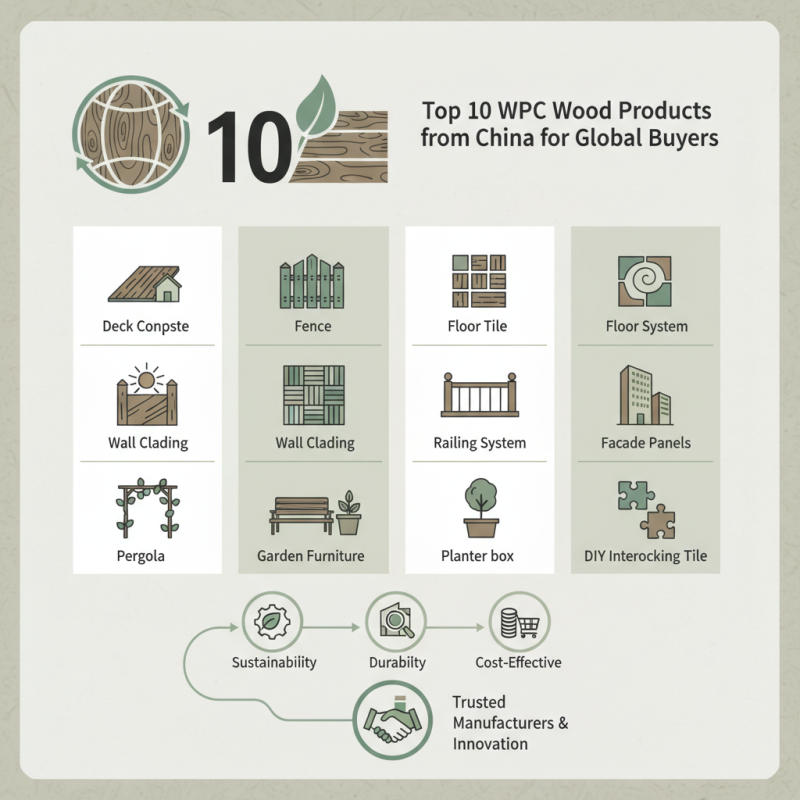
Top 10 WPC Wood Products from China for Global Buyers
| Product Type |
Application |
Average Price (USD per sq ft) |
Sustainability Rating |
Market Demand (Annual Volume) |
| WPC Decking |
Outdoor Flooring |
5.00 |
A |
1,500,000 sq ft |
| WPC Fencing |
Residential Fencing |
7.00 |
B |
800,000 sq ft |
| WPC Wall Cladding |
Exterior Wall Covering |
6.50 |
A |
600,000 sq ft |
| WPC Furniture |
Indoor/Outdoor Furniture |
15.00 |
A+ |
400,000 units |
| WPC Railings |
Balconies, Decks |
10.00 |
A |
300,000 ft |
| WPC Tiles |
Flooring |
4.50 |
B |
1,200,000 sq ft |
| WPC Landscaping |
Garden Borders |
3.50 |
A |
500,000 ft |
| WPC Molding |
Interior Trimming |
2.00 |
B |
700,000 ft |
| WPC Playground Equipment |
Children's Play Areas |
20.00 |
A+ |
250,000 units |
| WPC Planters |
Gardening |
8.00 |
A |
400,000 units |
Top Applications for WPC Wood Products in Global Markets
Wood-plastic composite (WPC) materials are gaining traction in global markets. Their diverse applications highlight their versatility and appeal. These products find use in outdoor decking, where they provide durability and aesthetics. Many homeowners favor WPC for its resistance to weather. Additionally, it requires minimal maintenance, making it a practical choice.
Another significant application is in landscaping. WPC materials are utilized for garden furniture, planters, and fencing. They blend natural wood looks with synthetic durability. This combination meets consumer demands for style and functionality. However, not all WPC products are created equal. Differences in composition can affect longevity and performance. Buyers must conduct thorough research to find quality options.
In construction, WPC is increasingly popular. Builders use it for cladding and interior paneling. It offers an eco-friendly alternative to traditional materials. However, some users may notice issues with fading or scratching over time. Ensuring proper installation can mitigate these problems. Addressing challenges within the production process remains crucial for improving WPC’s reputation in the market.
Top 10 WPC Wood Products from China
This chart showcases the global application areas for WPC wood products, indicating demand across various sectors.
Comparative Pricing of WPC Products: China vs. Other Countries
When comparing WPC (Wood Plastic Composite) products from China and other countries, pricing is a major factor. Chinese manufacturers often offer competitive prices due to lower production costs. For global buyers, this may prove advantageous. However, the quality of materials can vary significantly. Buyers should exercise caution and conduct thorough research on suppliers.
In many cases, cheaper prices might indicate lower quality. It's essential to weigh potential savings against durability and performance. Some buyers might overlook the importance of sourcing from reputable manufacturers. Such choices could lead to costly issues later. Understanding market trends and regional pricing differences can aid in making informed decisions.
Local regulations and shipping costs also play a critical role. While China may provide the most attractive upfront pricing, long-term expenses could arise during imports. For those in search of WPC products, it's crucial to consider the overall value rather than just the price tag. Thoughtful comparisons can lead to better purchasing outcomes and satisfied customers.
Sustainability Practices in WPC Wood Product Production in China
Sustainability is a significant focus in the production of Wood Plastic Composite (WPC) products in China. The industry has made strides to reduce its environmental impact. According to a recent report from the China Composite Materials Association, over 80% of WPC manufacturers now implement measures to recycle materials. This helps cut down waste and conserves natural resources.
Producing WPC often involves using recycled plastics and wood fibers. Data shows that utilizing recycled materials can lower carbon emissions by 30%. However, the quality and sourcing of these recycled components can vary widely among manufacturers. Global buyers should ensure that their suppliers adhere to strict quality standards.
Tip: Always ask for certifications on sustainability practices. This can help verify the environmental claims made by manufacturers.
Many Chinese manufacturers are transitioning to renewable energy sources. Roughly 45% of WPC production facilities now use solar or wind energy. Still, some factories lag behind in adopting these practices. Continuous improvement is needed in achieving renewable energy goals.
Tip: Consider suppliers who actively invest in green technology for their production processes. This indicates a commitment to sustainability.
Though WPC production has promising advancements in sustainability, challenges remain. Ensuring uniform practices across the entire supply chain is crucial. Buyers should remain diligent in their sourcing decisions.
Conclusion
The article "Top 10 WPC Wood Products from China for Global Buyers" provides a comprehensive overview of Wood Plastic Composite (WPC) wood products, highlighting their key characteristics and benefits such as durability, low maintenance, and environmental friendliness. It discusses the leading manufacturers within China, offering insights into market dynamics and potential growth areas.
Moreover, the article emphasizes the diverse applications of WPC wood products across various global markets, showcasing their versatility in construction, landscaping, and furniture. A comparative pricing analysis sheds light on the competitiveness of WPC products from China in contrast to those from other countries. Lastly, it touches upon sustainability practices in WPC wood product production in China, illustrating the industry's commitment to eco-friendly manufacturing processes while meeting international demand.

 Qianbang