Top 10 Fluted Panel Wall Types for Global Buyers

Time:2026-10-25 Author:Ethan
0%

Choosing the right Fluted Panel Wall involves more than matching a showroom color. Global buyers must consider material, climate, installation skills, maintenance, and long-term performance. A panel that looks refined in a dry studio may react differently beside a humid bathroom, a sunlit lobby, or a busy retail counter.

This guide examines ten practical Fluted Panel Wall types for residential, commercial, hospitality, and office interiors. It compares wood veneer, solid wood, MDF, PVC, WPC, acoustic, fire-rated, exterior-grade, waterproof, and flexible options. Each type offers different advantages. Some create warm vertical texture. Others improve sound control, resist moisture, or simplify cleaning. Real project details matter, such as a 2.4-meter ceiling, uneven masonry, concealed wiring, or frequent trolley traffic.

Performance comes first.

Reliable purchasing also requires more than attractive product images. Buyers should request technical sheets, sample colors, core specifications, edge details, installation instructions, and verified test documents. Local building requirements can differ widely, so professional review remains important before ordering large quantities. Supplier communication matters too, especially when container loading, replacement panels, or color consistency become concerns.

No single type fits every project. That is worth remembering. Even experienced buyers can underestimate substrate preparation or installation tolerances. This overview offers a practical starting point, while encouraging careful sampling, site assessment, and honest comparison before final selection.
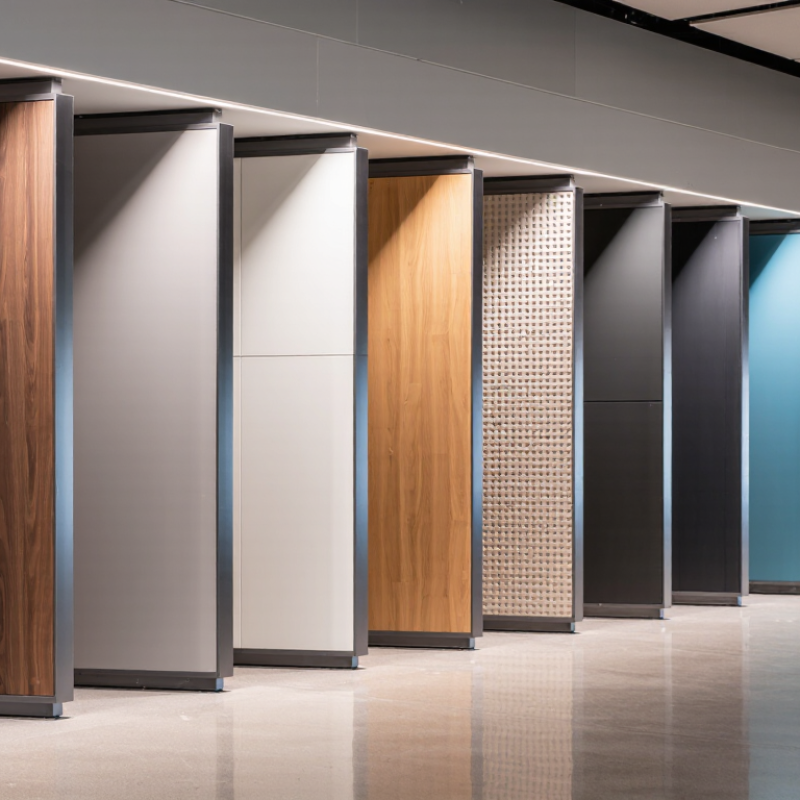
Top 10 Fluted Panel Wall Types for Global Buyers

Fluted Wall Panel Types by Material and Surface Design

Fluted wall panels differ greatly by material, surface profile, and installation performance. Natural wood veneer offers warm grain and slight variation, while painted MDF creates cleaner color control. PVC handles humid rooms well, but its surface may look less natural under strong lighting. WPC combines wood texture with improved moisture resistance. Solid wood feels premium, though movement requires careful expansion planning. Bamboo provides a renewable appearance with visible linear character. Aluminum suits commercial interiors needing durability and precise edges. PET felt adds acoustic value and softer visual depth. Mineral composite panels resist everyday impact, while stone polymer creates a heavier, architectural finish.

Surface design changes how a room feels. Narrow flutes create fine shadows and a taller visual rhythm. Wide flutes appear calmer and easier to clean. Deep grooves produce stronger contrast, especially beside directional lighting. Alternating ridge widths can form a more decorative pattern. Curved flutes soften reception areas and hospitality spaces. Flat-backed panels usually install faster, but uneven walls still need preparation. A sample can mislead.

I recommend checking panel density, groove accuracy, backing stability, and edge treatment before ordering. Measure the wall after flooring and skirting decisions are confirmed. In humid regions, confirm moisture data and suitable fixing methods from technical documents. For acoustic projects, ask for tested absorption results instead of trusting texture alone. Dark finishes reveal dust and installation gaps quickly. Light finishes hide some flaws, but they can expose uneven color. I have seen attractive samples fail when the substrate was ignored. That detail deserves more attention.

Indoor and Outdoor Fluted Panel Options for Different Spaces

Top 10 Fluted Panel Wall Types for Global Buyers

Indoor and outdoor fluted panels serve different performance needs. Indoor choices include natural wood veneer, engineered wood, MDF, PET acoustic, PVC, WPC, HPL, and mineral-core panels. Outdoor options commonly use WPC, aluminum, fiber cement, or weather-resistant composite boards. Each type needs a clear installation purpose.

For meeting rooms, PET acoustic panels can soften echoes and create a calmer sound environment. This matters because the World Health Organization links excessive indoor noise with sleep and concentration problems. Wood veneer adds warmth to hotels, offices, and residential walls. Moisture-resistant PVC suits bathrooms and utility areas, but it can look less natural under strong lighting. WPC works well in semi-covered balconies and exterior feature walls. However, color fading remains a practical concern.

Exterior panels face rain, ultraviolet exposure, wind, and temperature movement. Aluminum fluted panels offer low water absorption and stable dimensions. Fiber cement provides a solid, textured appearance, yet its weight increases handling demands. The United Nations Environment Programme reported that buildings and construction consumed about 34% of global energy in 2022. Material durability can reduce replacement waste, although manufacturing impacts still require review.

Check fire classification, formaldehyde emissions, recycled content, drainage details, and fastening systems before purchasing. Ask for test reports, not only product samples. Samples can mislead. A dark panel may absorb heat, while a wide flute may collect dust outdoors. Local climate and maintenance labor should influence the final specification. Fluted panels are attractive, but appearance alone is not a performance standard.

Top 10 Fluted Panel Wall Types for Global Buyers - Indoor and Outdoor Fluted Panel Options for Different Spaces

No. Fluted Panel Wall Type Typical Material Recommended Location Common Applications Typical Panel Size Key Performance Features Maintenance Level Important Buyer Considerations
1 Natural Wood Fluted Panels Solid wood, wood veneer, or veneered engineered board Indoor Living rooms, bedrooms, restaurants, reception walls, feature ceilings Width: 600–1,200 mm
Length: 2,400–3,000 mm
Thickness: 15–25 mm
Warm appearance, natural grain, good acoustic contribution when installed with an air gap and backing material Moderate Check moisture content, veneer matching, fire classification, formaldehyde emissions, and protection from prolonged humidity.
2 MDF Fluted Acoustic Panels MDF slats with wood veneer, paint, or decorative foil on a PET acoustic backing Indoor Offices, meeting rooms, home theaters, studios, hotels, corridors Width: 600–600 mm
Length: 2,400–2,750 mm
Thickness: 21–25 mm
Improves sound absorption when paired with acoustic felt; provides regular grooves and consistent dimensions Low to moderate Review the tested sound absorption rating, substrate density, edge quality, indoor-air emissions, and installation system.
3 PVC or WPC Fluted Wall Panels Polyvinyl chloride or wood-plastic composite Indoor Covered outdoor Bathrooms, kitchens, retail interiors, balconies, sheltered exterior walls Width: 150–220 mm
Length: 2,900–3,000 mm
Thickness: 20–30 mm
Moisture resistant, lightweight, easy to cut, and available in wood-look finishes Low Confirm temperature range, UV resistance, fire behavior, expansion allowance, and suitability for direct water exposure.
4 Exterior WPC Fluted Cladding Wood-plastic composite with a capped or co-extruded weather-resistant surface Outdoor Facades, garden walls, balcony screens, porch ceilings, commercial exteriors Width: 140–219 mm
Length: 2,900–3,600 mm
Thickness: 20–30 mm
Resistant to rain, rot, and insects; lower routine maintenance than untreated wood Low Verify UV color stability, water absorption, slip or fire requirements where relevant, fastening method, and thermal movement.
5 Aluminum Fluted Panels Powder-coated, anodized, or PVDF-finished aluminum Indoor Outdoor Building facades, transport facilities, retail spaces, feature walls, soffits Module width: 100–300 mm
Length: Project-specific
Thickness: 1.0–3.0 mm sheet or formed profile
Lightweight, non-combustible in many configurations, corrosion resistant, and suitable for contemporary architectural designs Low Check alloy, coating specification, wind-load design, galvanic corrosion protection, drainage, and local fire-code requirements.
6 GRC or Fiber-Cement Fluted Panels Glass-fiber-reinforced concrete or fiber-cement composite Outdoor High-traffic indoor Commercial facades, institutional buildings, podiums, entrance walls, ventilated rainscreens Width: 300–1,200 mm
Length: 1,200–3,600 mm
Thickness: 8–20 mm
Good dimensional stability, impact resistance, weather durability, and compatibility with ventilated facade systems Low to moderate Assess panel weight, structural subframe, edge protection, water management, fixing details, and lifting requirements.
7 Acoustic PET Felt Fluted Panels Recycled PET acoustic felt formed into slats, fins, or molded flutes Indoor Open-plan offices, classrooms, libraries, restaurants, media rooms, call centers Width: 600–1,200 mm
Length: 2,400–3,000 mm
Thickness: 9–25 mm
Lightweight, easy to fabricate, softens reverberation, and can be produced with recycled content Low Request acoustic test data, recycled-content documentation, stain resistance, cleanability, and fire classification.
8 Gypsum or Mineral-Based Fluted Panels Decorative gypsum, glass-fiber-reinforced gypsum, or mineral composite Indoor Hotels, galleries, theaters, offices, lobbies, premium residential interiors Width: 300–1,200 mm
Length: 1,200–2,400 mm
Thickness: 12–30 mm
High-quality monolithic appearance, good fire performance in suitable systems, and compatibility with painted finishes Moderate Confirm weight, impact resistance, joint treatment, humidity limits, substrate preparation, and installer skill requirements.
9 Stone or Ceramic Fluted Panels Fluted porcelain, ceramic, sintered stone, or machined natural stone Indoor Outdoor Bathrooms, hospitality interiors, entrance walls, retail displays, ventilated facades Width: 300–1,200 mm
Length: 600–3,200 mm
Thickness: 6–20 mm
High resistance to moisture, staining, abrasion, and sunlight when the selected finish is rated for the application Low Evaluate weight, cutting tolerances, breakage risk, slip or impact requirements, adhesive compatibility, and mechanical anchoring.
10 Metal Composite Fluted Panels Aluminum composite material or steel-faced composite with a formed fluted profile Indoor Outdoor Retail facades, commercial entrances, feature walls, ceilings, signage backgrounds Module width: 200–1,500 mm
Length: Project-specific
Thickness: 3–6 mm composite panel
Large-format capability, consistent finish, low surface maintenance, and efficient installation with a carrier frame Low Check core type, fire certification, coating durability, panel flatness, wind pressure, joint design, and local facade regulations.

Performance Factors: Durability, Moisture Resistance, and Maintenance

Top 10 Fluted Panel Wall Types for Global Buyers

The ten common options include solid wood, bamboo, plywood, MDF, PET felt, PVC, WPC, mineral composite, aluminium, and steel. Their performance differs sharply. In real installations, the panel face is rarely the weakest point. Joints, cut edges, fasteners, and wall cavities usually create trouble first.

ASTM E96 measures water vapour transmission, not complete waterproofing. Buyers should request test results for the finished assembly, not only the decorative board. EPA moisture guidance warns that mould may develop within 24 to 48 hours after water exposure. That makes sealed edges and ventilated cavities essential in humid bathrooms, coastal buildings, and poorly conditioned warehouses. PVC and aluminium resist moisture well, but their thermal movement can open joints. MDF looks stable indoors, yet swelling after repeated wetting is difficult to reverse. It is an uncomfortable detail.

The 2023 UNEP Global Status Report for Buildings and Construction states that buildings consume about 30% of global energy and produce roughly 26% of energy-related emissions. Lightweight PET, bamboo, or recycled-content composites may reduce transport impacts, but durability still matters. Replacing failed panels creates additional waste. Maintenance should include quarterly checks for loose clips, stained joints, edge swelling, and trapped dust. Use neutral cleaners and soft brushes. Avoid assuming “water-resistant” means “washable.” It does not. Fire classification should also follow EN 13501-1 or an equivalent local standard, especially for tall or public buildings.

How to Compare Fluted Panels for Global Building Requirements

Top 10 Fluted Panel Wall Types for Global Buyers

When comparing fluted panels for global building requirements, start with the project environment, not appearance. Common options include PVC, WPC, MDF, solid wood, bamboo, aluminum, steel, PET acoustic felt, mineral-based, and exterior composite panels. Each type responds differently to humidity, impact, heat, sound, and cleaning. In project reviews, I check the technical sheet, installation method, substrate, and sample edges. A beautiful panel can fail when moisture enters an unsealed joint.

For humid interiors, PVC, WPC, aluminum, and mineral-based panels may offer more stable performance. MDF and solid wood can provide warmth, but they need careful moisture control and suitable coatings. PET felt can improve room acoustics, while metal panels support durable commercial applications. Exterior panels require verified UV resistance, drainage details, and thermal movement allowances. Buyers should also compare fire test classifications, formaldehyde or VOC data, recycled content, cleaning resistance, and available documentation for the target market. Requirements vary. Assumptions can be expensive.

Tips: Request full-size samples, not only small swatches. Test color, groove depth, edge finishing, and fixing strength. Ask for installation tolerances and replacement procedures. Compare declared test standards carefully, because similar-looking certificates may measure different properties. I have seen projects focus on unit price and overlook labor, packaging damage, and local installer skill. That approach rarely stays cheap. A small mock-up is usually worth the delay.

Top 10 Fluted Panel Wall Types for Global Buyers

How to Compare Fluted Panels for Global Building Requirements

How to read this chart: Typical dry system weight is shown in kilograms per square metre. Lower-weight systems can reduce shipping costs and structural load, while heavier systems may offer greater impact resistance, acoustic mass, or fire-rated construction. Values are representative midpoints from commonly specified panel and backing-system ranges; final selection should be verified against local fire, moisture, acoustic, wind-load, and installation requirements.

Global Buying Guide: Standards, Customization, and Supplier Selection

Global buyers often compare fluted panels by appearance first, but installation risk begins much earlier. The ten common types include solid wood veneer, MDF, PVC, WPC, bamboo, aluminum, gypsum, mineral fiber, acoustic PET, and fire-rated engineered boards. Each type serves a different environment. For example, PET panels suit offices requiring sound absorption, while aluminum performs better in humid commercial areas. Decorative quality is only one decision factor.

Request technical data before requesting a final quotation. Check panel dimensions, flute spacing, core density, moisture resistance, surface durability, and formaldehyde emissions. Fire performance should match local requirements, such as EN 13501-1 or ASTM E84, with certificates from recognized laboratories. Acoustic claims need test details, including frequency ranges and mounting conditions. A certificate without a test scope is not enough.

Customization may involve color, veneer direction, edge treatment, backing fabric, perforation, and nonstandard lengths. Confirm tolerances in writing, especially for joints and wall transitions. I have seen attractive samples fail because the production batch changed slightly. Ask for a production sample, packaging photos, and a small trial order. Inspect corner protection and moisture barriers upon delivery. Supplier selection should include factory experience, inspection procedures, replacement policies, and export documentation. A low price can hide installation waste. No buying guide is flawless, and buyers should question assumptions before approving a large order.

FAQS

Which fluted panels suit indoor spaces?

Wood veneer adds warmth to hotels, offices, and homes. MDF suits dry interiors. PET acoustic panels soften echoes in meeting rooms. PVC works better in bathrooms and utility areas. Appearance alone is not enough.

Which panels are suitable for outdoor walls?

WPC suits semi-covered balconies and feature walls. Aluminum handles rain and temperature changes well. Fiber cement offers a solid, textured surface. Steel can provide strength, but its weight and corrosion protection need review.

Are fluted panels completely waterproof?

No. “Water-resistant” does not mean washable. Sealed edges, drainage, and ventilated cavities matter. MDF may swell after repeated wetting. PVC and aluminum resist moisture, but moving joints can still open.

What usually causes panel failure?

Joints, cut edges, fasteners, and wall cavities often fail before the panel face. Poor sealing allows water inside. Weak fixing systems may loosen under movement. The decorative surface can look perfect while the assembly deteriorates.

How should buyers compare test information?

Request reports for the finished wall assembly, not only the decorative board. Water vapour testing does not prove complete waterproofing. Check fire classification, emissions, recycled content, drainage, and fastening details. Samples can mislead.

How often should fluted panels receive maintenance?

Inspect them quarterly. Check loose clips, stained joints, swollen edges, and trapped dust. Use neutral cleaners and soft brushes. Avoid harsh scrubbing. Small defects can become expensive.

Do fluted panels improve indoor comfort?

PET acoustic panels can reduce echoes and make meeting rooms calmer. Wood surfaces create visual warmth. Yet acoustic performance depends on the wall cavity and installation. A decorative flute alone cannot guarantee quietness.

What environmental factors should influence the specification?

Consider local rain, ultraviolet exposure, wind, heat, and maintenance labor. Durable panels may reduce replacement waste. Lightweight materials can reduce transport impacts. Manufacturing impacts still deserve review. I would not judge sustainability from recycled content alone.

Conclusion

This guide explores the top 10 Fluted Panel Wall types for global buyers, organized by material, texture, finish, and intended application. It explains how wood-based, polymer, composite, metal, and other panel options create different visual effects, from subtle linear grooves to bold architectural patterns. Readers will also learn how to select suitable indoor and outdoor solutions for living areas, offices, hospitality spaces, façades, balconies, and other environments.

The article compares key performance factors, including structural durability, moisture resistance, fire considerations, UV stability, acoustic behavior, cleaning requirements, and long-term maintenance. It also provides a practical framework for evaluating panel thickness, installation systems, surface treatments, environmental conditions, and project budgets. For international purchasing, the guide highlights the importance of checking applicable standards, requesting samples, confirming customization capabilities, reviewing technical documentation, and assessing supplier reliability, packaging, lead times, and after-sales support before making a final decision.


Ethan

Ethan

Ethan is a seasoned marketing professional with a deep expertise in our company's innovative product line. With a passion for sharing knowledge and insights, he takes the lead in regularly updating our corporate blog, where he explores industry trends, product features, and effective marketing......