10 Fluted Wood Panels Buying Tips for Global Buyers

Time:2026-09-09 Author:Mason
0%

For global buyers, Fluted Wood Panels are not merely decorative wall products. Their grooves influence acoustics, shadows, cleaning, and installation time. A panel that looks warm online may feel brittle under warehouse lighting. That gap matters. The FAO Global Forest Resources Assessment 2020 reports that forests cover 31% of the world’s land area. It also documents continuing pressure from deforestation, despite slower forest loss since 1990. This context makes species selection, legal sourcing, recycled content, and certification commercially important.

Market conditions add another layer of risk. The FAO and UNECE Forest Products Annual Market Review 2023–2024 describes volatility across timber production, trade, and prices. Buyers should therefore compare more than the quoted panel price. Ask for core density, veneer thickness, moisture resistance, fire classification, and packaging details. Request current laboratory reports, not attractive claims copied into a brochure. For formaldehyde-sensitive interiors, verify compliance with applicable requirements such as TSCA Title VI, CARB Phase 2, or relevant European standards. Certifications help, but they do not replace product testing.

This guide presents ten practical buying tips for international sourcing teams. It considers samples, groove consistency, dimensional tolerance, acoustic backing, minimum order quantities, lead times, and after-sales responsibility. A real sample reveals rough edges, uneven staining, and weak adhesive lines. Screens cannot. No checklist is flawless. Even experienced buyers sometimes overlook container humidity or replacement quantities. That is why reliable purchasing combines documented evidence with hands-on inspection. The best Fluted Wood Panels are not simply beautiful; they remain stable, safe, traceable, and workable after delivery.
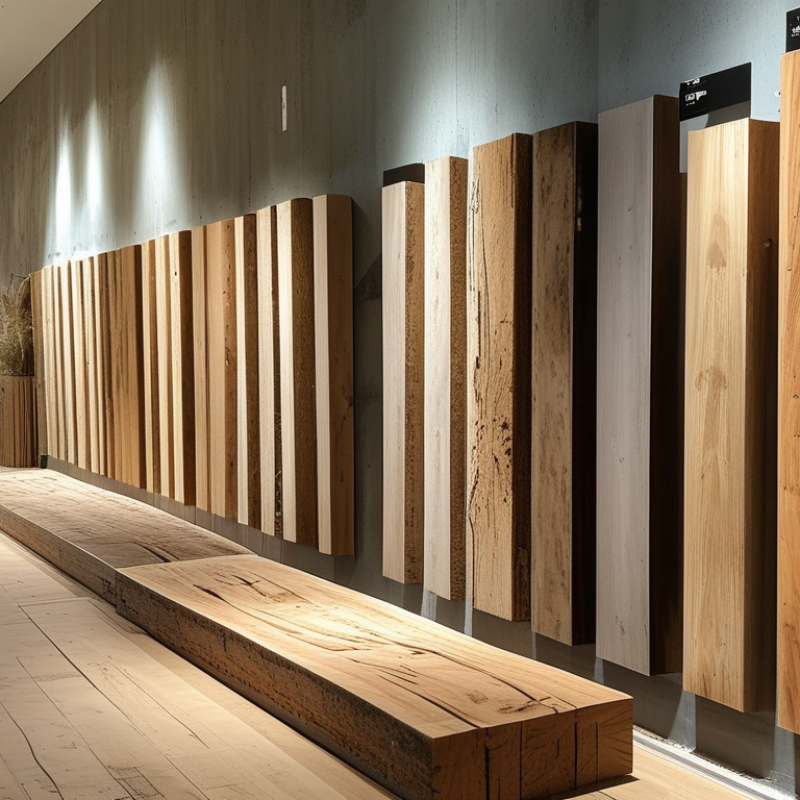
10 Fluted Wood Panels Buying Tips for Global Buyers

Understanding Fluted Wood Panel Types, Materials, and Construction

10 Fluted Wood Panels Buying Tips for Global Buyers

Fluted wood panels differ in profile, core, surface, and installation method. Solid timber offers natural grain and stronger edge repair. Veneered panels provide a similar appearance with better material efficiency. Engineered wood cores usually improve stability in changing climates. MDF is smooth and economical, but moisture exposure needs careful control.

Acoustic panels often combine a grooved face with recycled felt backing. That backing affects sound absorption, fire performance, and wall spacing.

Construction details deserve close inspection. Ask about flute depth, width, spacing, panel thickness, and joint alignment. A shallow groove may look subtle, while a deep profile creates stronger shadows.

Check whether the slats are bonded, mechanically fixed, or mounted on a carrier board. Adhesive-only systems can be difficult to correct.

I have seen attractive samples fail when uneven walls exposed poor tolerances. Small gaps become obvious under side lighting.

Buying tips:

Request a full-size sample, not only a photograph. Confirm timber species, veneer matching, moisture content, and formaldehyde information. Check the backing material and its fire classification for your destination market.

Ask for installation tolerances and replacement-panel availability. Measure the wall twice.

It still happens: buyers order by area and forget cutting waste.

Review packaging, corner protection, and humidity controls before shipment. A clear technical datasheet reduces disputes, although it cannot replace a physical inspection.

Checking Dimensions, Profiles, Finishes, and Technical Specifications

When sourcing fluted wood panels internationally, confirm dimensions before comparing prices. Check overall panel size, usable coverage, slat width, groove width, and groove depth. A panel measuring 2,400 mm may provide less coverage after trimming. Ask for dimensional tolerances in writing. Small differences can create visible lines across a large wall.

Tip: Request a scaled technical drawing and one physical sample. Digital images often hide edge details, uneven spacing, and color variation. I have seen specifications look correct while the actual groove depth felt too shallow. That mistake was costly to correct. Recheck every measurement against the installation layout.

Profile selection affects appearance, cleaning, and acoustic performance. Narrow slats create a busier rhythm, while wider profiles look calmer in offices and hospitality spaces. Confirm the core material, backing layer, panel weight, and fixing method. For humid locations, request moisture resistance data and installation limits. Fire classification and acoustic test results should match the destination building codes. Do not accept vague claims such as “sound absorbing” without test conditions.

Tip: Examine finish samples under warm and cool lighting. Compare matte, stained, veneered, and painted surfaces for sheen, touch, and repairability. Confirm whether the finish covers cut edges. Also ask about batch consistency, packaging, lead time, and replacement procedures. These details are easy to overlook, but they influence the final result more than a brochure suggests.

10 Fluted Wood Panels Buying Tips for Global Buyers: Checking Dimensions, Profiles, Finishes, and Technical Specifications

No. Buying Dimension Recommended Data and Technical Reference How to Check Before Ordering Global Buyer’s Purchasing Note
1 Overall Panel Dimensions Common panel formats include approximately 2400–3000 mm in length and 300–600 mm in width. Typical overall thicknesses are 18–30 mm, depending on the substrate and decorative profile. Request a dimensioned technical drawing. Confirm length, width, thickness, usable coverage, squareness, and dimensional tolerances with a calibrated steel rule or digital caliper. Make sure the stated size distinguishes between the full panel size and the actual visible coverage after joining or trimming.
2 Flute Width, Depth, and Pitch A flute profile should specify the flute width, valley width, flute depth, and center-to-center pitch. Decorative profiles commonly use depths of approximately 5–15 mm, but the exact value is design-specific. Compare a cross-section drawing or physical sample with the approved profile. Measure several flutes across the panel rather than checking only one location. Profile consistency affects shadow lines and joint alignment. Define an allowable profile tolerance in the purchase specification.
3 Substrate and Core Construction Typical constructions use MDF, plywood, or another engineered wood substrate with a decorative veneer, foil, laminate, or painted surface. Moisture-resistant MDF is generally preferable for rooms with occasional humidity, subject to the manufacturer’s declared classification. Ask for the substrate type, density range, formaldehyde-emission class, moisture resistance, and cross-sectional sample. Do not rely only on the surface appearance. The core determines weight, screw-holding performance, machining behavior, and suitability for dry interiors, humid areas, or special applications.
4 Dimensional Tolerance and Flatness The quotation should state tolerances for length, width, thickness, edge straightness, and flatness. For interior millwork, buyers commonly request project-specific limits rather than accepting an undefined “standard tolerance.” Place the panel on a flat reference surface and check for bow, twist, and edge deviation. Inspect multiple pieces from the same production batch. Agree on the sampling method, inspection level, and acceptable rejection criteria before mass production to avoid disputes after shipment.
5 Surface Finish and Color Consistency Available finishes may include natural wood veneer, stained veneer, painted coating, decorative film, or laminate. A complete specification should identify gloss level, color reference, grain direction, texture, and whether the finish is open-pore or closed-pore. Approve a signed or documented control sample. Check color under consistent lighting and compare panels from different production lots. Natural wood is inherently variable. Define acceptable differences in tone, grain, knots, mineral streaks, and repaired areas in writing.
6 Coating Performance For coated panels, request declared performance for adhesion, abrasion resistance, scratch resistance, stain resistance, and light exposure where relevant. Test methods and rating scales should be identified rather than described only as “high quality.” Review laboratory reports or project-specific test results. Conduct a small sample test using representative cleaning agents and expected handling conditions. Interior wall panels, furniture panels, and commercial fit-out panels may require different coating performance levels.
7 Fire Performance Fire behavior depends on the complete assembly, including the wood product, coating, adhesive, air gap, backing, and installation method. Request the applicable reaction-to-fire classification or local code test report for the intended use. Confirm that the test report matches the exact panel construction, thickness, finish, mounting method, and market requirements. A fire rating for one configuration cannot automatically be transferred to a different substrate, finish, thickness, or installation system.
8 Acoustic and Thermal Expectations Fluted panels can influence sound diffusion and absorption, but the result depends strongly on the backing, cavity depth, mineral wool or felt layer, perforation, and room arrangement. Thermal insulation should not be assumed from the decorative panel alone. Request acoustic test data for the complete wall or ceiling assembly, including the mounting system and backing. Check whether the reported value is absorption, transmission loss, or diffusion. Do not compare acoustic values from different test methods or incomplete assemblies as if they were equivalent.
9 Installation, Joints, and Accessories The system should define clip, screw, adhesive, batten, rail, edge-trim, corner, and end-detail requirements. Allow for substrate movement, ventilation where required, and access to electrical services. Request an installation manual and a sample corner or joint. Confirm visible joint width, alignment of flutes, cut-edge treatment, and field-replacement procedure. Include installation accessories and recommended spare panels in the order, especially for large projects or long-distance shipments.
10 Packaging, Moisture, and Shipping Data The supplier should state panel weight, package dimensions, panels per carton or crate, net and gross weight, storage conditions, and moisture protection. Wood-based panels should be protected from rain, condensation, and prolonged high humidity during transport and storage. Review the packing list and shipping marks. Check whether export packaging complies with the destination country’s wood-packaging requirements and whether the panels are secured against abrasion and edge damage. Calculate container utilization using packed dimensions, not only product dimensions. Require acclimatization instructions before installation when the project environment differs from the shipping environment.

Evaluating Suppliers, Certifications, Samples, and Quality Standards

10 Fluted Wood Panels Buying Tips for Global Buyers

Evaluating Suppliers, Certifications, Samples, and Quality Standards

Global buyers should verify a supplier’s legal registration, factory address, production capacity, and export experience. Ask for recent project references, not only polished catalog photos. A reliable supplier should explain wood species, core materials, surface coatings, and production tolerances clearly. Visit the factory remotely or in person when possible. Real production floors reveal more than websites.

Request certificates for formaldehyde emissions, fire performance, moisture resistance, and responsible material sourcing. Check issuing laboratories, test dates, product names, and applicable standards. A certificate without traceable details deserves careful review. Do not accept copied documents. Ask whether testing covers the exact panel structure and finish you plan to purchase.

Always order samples before approving bulk production. Compare groove depth, spacing, color consistency, edge quality, backing strength, and panel flatness. Test several pieces, not just one. Measure thickness with a caliper. Check the surface under bright side lighting. Small defects become obvious there. Consider humidity changes during shipping and installation. Packaging should protect corners, surfaces, and moisture-sensitive materials. Agree on inspection methods, acceptable defect limits, replacement terms, and pre-shipment checks in writing. I have seen attractive samples fail after careless packing. That lesson is easy to overlook. A sample may also hide batch variation, so request production-line samples when possible. Supplier evaluation is never perfectly objective; keep written records and review your assumptions before placing a large order.

Comparing Prices, Minimum Orders, Packaging, and Shipping Terms

When comparing fluted wood panel prices, check more than the quoted unit cost. Ask whether the price includes the core material, surface finish, edge treatment, and quality inspection. A low price may hide thinner panels or inconsistent spacing between flutes. Request a specification sheet and one physical sample before approving a large order. I have found that sample approval prevents expensive color disputes later.

Minimum order quantities can affect the real project budget. Some suppliers accept mixed colors or sizes, while others require one full production batch. Confirm whether the minimum applies to each design, finish, or total order. Also ask about production time, replacement policies, and payment milestones. Be careful here. A flexible minimum order is useful, but it may increase the unit price.

Packaging deserves practical attention. Panels should have corner protection, moisture-resistant wrapping, and stable pallets. Photograph the packed goods before loading. For shipping, compare EXW, FOB, CIF, and DDP terms carefully. Confirm who handles inland transport, export documents, insurance, unloading, and import duties. Shipping costs can change sharply with volume and destination. Use the panel dimensions and packed weight, not estimates, when requesting freight quotes. I once underestimated pallet height and paid for unused container space. That mistake still influences my purchasing checklist. Allow extra time for port delays and inspect the shipment immediately after arrival. Keep records of quantities, packaging damage, and visible surface defects. Reliable documentation supports fair claims and clearer supplier communication.

Planning Installation, Maintenance, Compliance, and Long-Term Use

10 Fluted Wood Panels Buying Tips for Global Buyers

Planning installation starts with the wall, not the panel. Measure height, width, corners, outlets, and door clearances twice. Small errors multiply. Ask suppliers for actual panel dimensions, flute spacing, core composition, weight, and tolerances. Request samples in daylight, because grain color can change under warm lighting. Check whether the system suits masonry, drywall, or a metal frame.

Confirm installation instructions before placing a large order. Include expansion gaps where temperature or humidity may change. Leave room for movement. Plan concealed fixing, adhesive compatibility, edge trims, and access to electrical services. A qualified installer should review fire performance, acoustic claims, moisture resistance, and indoor air emissions. Requirements vary by destination, building type, and room use, so obtain current local documentation instead of relying on a sales sheet. Keep test reports, technical drawings, batch numbers, and maintenance guidance in one project file.

Long-term care is usually simple but not careless. Use a soft vacuum brush and a slightly damp cloth. Avoid soaking the grooves or applying abrasive cleaners. In kitchens, bathrooms, and coastal areas, inspect edges and joints more often. Damaged sections may be difficult to replace if colors change between batches. Order spare panels now. This is easy to overlook. Also consider future removal, recycling options, and access behind the wall. A cheaper panel may become expensive after repeated repairs, delayed installation, or poor indoor comfort. Recheck every assumption before approval.

FAQS

: What should a fluted wood panel price include?

: Check the core material, surface finish, edge treatment, and quality inspection. A low quote may hide thinner panels or uneven flute spacing. Request a specification sheet and one physical sample. Samples prevent costly color disagreements.

How can minimum order quantities affect my budget?

Confirm whether the minimum applies to each design, finish, size, or total order. Mixed colors may be possible, but the unit price could increase. Ask about production time and replacement policies. Small orders are convenient.

What packaging details should I require?

Panels need corner protection, moisture-resistant wrapping, and stable pallets. Ask for photos before loading. Check pallet height and packed weight carefully. Packaging damage can complicate later claims.

How should I compare shipping terms?

Compare EXW, FOB, CIF, and DDP responsibilities clearly. Confirm who handles inland transport, export documents, insurance, unloading, and import duties. Use actual dimensions and packed weight for freight quotes. Estimates can mislead.

What measurements are important before installation?

Measure wall height, width, corners, outlets, and door clearances twice. Small errors can multiply across several panels. Confirm actual panel dimensions, flute spacing, weight, and tolerances. Measure twice.

How can I check whether panels suit my project?

Ask whether the system works with masonry, drywall, or metal framing. Confirm concealed fixing, adhesive compatibility, edge trims, and access requirements. Review movement gaps for changing temperature or humidity. A qualified installer should assess the installation plan.

What documents should I keep for compliance and quality control?

Keep test reports, technical drawings, batch numbers, and maintenance instructions together. Check current local requirements for fire performance, moisture resistance, acoustics, and indoor emissions. Do not rely only on a sales sheet. Requirements can vary.

How should I maintain and inspect the panels?

Use a soft vacuum brush and a slightly damp cloth. Avoid soaking the grooves or using abrasive cleaners. Inspect edges and joints more often in kitchens, bathrooms, and coastal areas. Order spare panels before colors change between batches.

What common purchasing mistake should I avoid?

Do not compare only the unit price. Include packaging, freight, installation delays, repairs, and future replacement difficulty. I once underestimated pallet height and paid for unused container space. That mistake still affects my checklist.

Conclusion

Buying Fluted Wood Panels for an international project requires careful evaluation from design through long-term use. Start by comparing panel types, core materials, surface layers, and construction methods to ensure they match the intended application. Confirm exact dimensions, groove profiles, finishes, acoustic or fire-performance data, moisture resistance, and installation requirements. Request technical documents and physical samples so color, texture, strength, and workmanship can be assessed before placing an order.

A reliable supplier should provide clear quality standards, relevant certifications, consistent production, and responsive communication. Compare total costs rather than unit prices alone, including minimum order quantities, custom fees, packaging, insurance, and shipping terms. Before purchase, clarify lead times, inspection procedures, replacement policies, and delivery responsibilities. Finally, plan installation with suitable tools and qualified personnel, follow care instructions, and consider cleaning, humidity control, repairs, and future availability. A structured purchasing process helps global buyers achieve attractive, durable, compliant, and cost-effective results.


Mason

Mason

Mason is a seasoned marketing professional with a deep expertise in the company's offerings and a passion for driving brand awareness. With a strong background in digital marketing strategies, he has an innate ability to connect with diverse audiences and effectively communicate product benefits.......