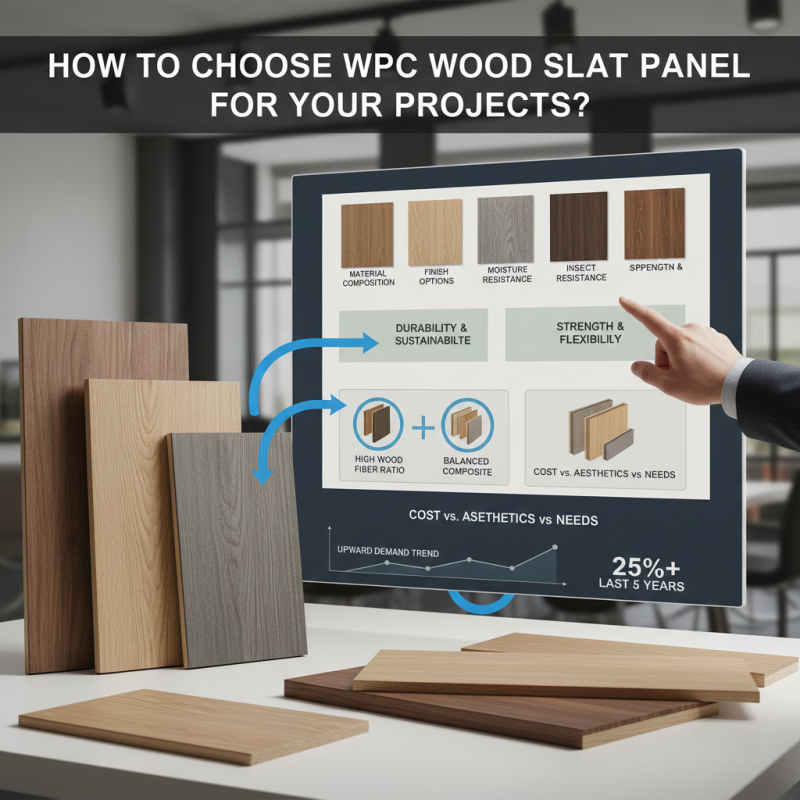
The selection of Wpc Wood Slat Panels is crucial in modern construction and design projects. According to recent industry reports, the demand for wood-plastic composites (WPC) has surged by over 25% in the last five years. This growth reflects a broader trend towards sustainable materials that offer both aesthetic appeal and functional durability. Wpc Wood Slat Panels stand out for their ability to resist moisture and insects, making them suitable for a variety of environments.
However, not every Wpc Wood Slat Panel is created equal. Factors such as material composition, finish, and application context can significantly affect performance and longevity. For instance, a study indicated that panels with a higher ratio of wood fibers provide greater strength, yet may be less flexible. Users must navigate these choices carefully to avoid costly mistakes. While many panels promise durability, real-world applications often reveal discrepancies in performance expectations.
Understanding these nuances is essential for making informed decisions in your projects. The versatility of Wpc Wood Slat Panels can open up new design possibilities. However, buyers must be wary of quality variations in the market. Balancing cost, aesthetics, and application needs is key to achieving satisfactory results.
WPC wood slat panels have become popular for various projects, offering an innovative solution for both indoor and outdoor applications. These panels are made from a blend of wood fibers and plastic, providing a durable and weather-resistant option. According to a recent study by MarketsandMarkets, the WPC market is projected to reach USD 7.38 billion by 2026, illustrating a growing trend in construction and design.
Using WPC wood slat panels can enhance aesthetic appeal while offering practical advantages. Their resistance to moisture and UV rays makes them ideal for outdoor decking and fencing. In fact, data suggests that WPC panels can last up to five times longer than traditional wood. However, not all WPC products are created equal. Different manufacturing processes can affect strength and longevity. Understanding these nuances is essential for making informed choices.
Consideration for the environmental footprint is also crucial. While WPCs are marketed as eco-friendly, the production process can vary widely. Transparency in sourcing materials is essential for sustainability. It’s important to research and choose panels that align with your project’s values. Ultimately, weighing these benefits against potential shortcomings can guide you to the right decision.
When evaluating different types of WPC materials for your projects, understanding their composition is crucial.
WPC, or wood-plastic composite, ranges in quality based on its wood fiber and plastic content.
According to industry studies, the ideal WPC should contain at least 50% wood fiber to ensure strength and durability.
Materials with higher plastic content often lack the natural feel that consumers desire.
It’s essential to consider environmental factors when choosing WPC.
Reports indicate that UV resistance is vital to prolong the life of outdoor installations.
Products that are highly UV-stabilized can resist fading for years, whereas others may discolor in just a few months.
In addition, the choice of additives can impact both performance and safety, with flame-retardant options becoming increasingly popular.
Tip: Look for third-party certifications to ensure quality.
Some tests evaluate slip resistance and strength, providing concrete data to inform your decision.
Tip: Always request samples before purchasing; not all materials meet expectations.
Remember, not every WPC product will suit your specific project needs, so taking the time to investigate is vital for a successful outcome.
When selecting WPC wood slat panels for your projects, several factors come into play. Consider the climate in your area. Different environments can impact the longevity and performance of the panels. If you live in a humid region, look for moisture-resistant materials. In contrast, dry climates may demand UV protection.
It's essential to evaluate the aesthetics you desire. WPC panels come in various colors and finishes. Think about how they will complement your existing architecture. Visualizing the end result can guide your choice more effectively.
Tips: Always request samples before committing. This helps you assess the texture and color in your space. Pay attention to the installation requirements as well. Some designs may demand specific hardware or techniques that could influence your budget or timeline.
Another crucial aspect is the panel's thickness. Thicker panels may offer better durability but could also increase weight and installation complexity. Assess your project's needs carefully. It's vital to balance durability with ease of handling. Taking time to review your options will save you from future regrets.
| Factor | Description | Importance | Recommended Value |
|---|---|---|---|
| Durability | Resistance to weather, moisture, and pests. | High | Minimum 25 years |
| Aesthetics | Visual appeal and design options available. | Medium | Variety of colors and textures |
| Cost | Initial investment and long-term maintenance expenses. | High | Budget-friendly options below $50 per sq. ft. |
| Installation | Ease and complexity of installation process. | Medium | DIY-friendly products available |
| Sustainability | Environmental impact of materials used. | High | Recycled materials preferred |
When considering WPC wood slat panels for your projects, precise sizing and installation are crucial. Begin by measuring your space accurately. Ensure the dimensions allow for proper fitting and aesthetic appeal. Panels typically come in standard widths and lengths, but custom sizes can be requested. Determine the area you want to cover and calculate how many panels will fit.
Installation often requires specific tools, such as a saw for cutting panels and a drill for securing them. Installation should take into account the environment. WPC materials can expand and contract with temperature changes. Leaving a gap around the edges ensures panels can adjust without warping. Check that you have the right fasteners for your selected panel thickness, as it impacts stability.
Even experienced installers face challenges. Aligning slats perfectly can be tricky. Misaligned edges lead to gaps and disrupt the overall look. Patience and attention to detail are key. After installation, reflect on your work. Are the panels even? Did you account for environmental changes? Mistakes can provide valuable learning experiences, enhancing your next project.
WPC wood slat panels are durable and versatile options for various projects. However, maintaining their longevity requires careful attention. A recent industry report indicates that proper maintenance can extend the life of WPC panels by up to 50%. Regular cleaning is essential. Use a mild detergent with water to remove dirt and debris. Avoid harsh chemicals that can degrade the material.
Inspect the panels regularly for signs of wear. Look for scratches or discoloration. A simple touch-up can prevent larger issues. Moisture can be detrimental, so ensure the panels are installed in a way that allows for drainage. Many experts recommend sealing the panels every few years to enhance their resistance to weather and UV damage. Studies show that sealed WPC materials perform better in outdoor settings.
In regions with extreme weather, the risk increases. Be proactive about addressing any damage. Repairing minor issues now can save costs later. While WPC materials are designed to withstand elements, they still require vigilance. Maintaining these panels is about creating a sustainable, beautiful outdoor space.
: WPC stands for wood-plastic composite. It combines wood fiber and plastic for various uses.
Ideally, WPC should contain at least 50% wood fiber for strength and durability.
UV resistance prolongs outdoor installations’ life. It prevents fading and discoloration over time.
Regular cleaning with mild detergent is essential. Avoid harsh chemicals that damage the material.
Look for third-party certifications. Tests for slip resistance and strength are helpful indicators.
Consider climate, desired aesthetics, thickness, and installation requirements. Each impacts performance and looks.
Humid climates require moisture-resistant materials, while dry areas need UV protection.
Inspect for scratches or discoloration regularly. Touch-ups can help prevent larger issues.
Yes, sealing panels enhances their resistance to weather and UV damage. It is recommended every few years.
No, different products suit different needs. Research is vital to ensure you choose the right option.
WPC Wood Slat Panels are an innovative choice for various construction and design projects, offering a blend of aesthetics and durability. Understanding their benefits is crucial, as they provide lightweight yet sturdy options that can be tailored to different environmental conditions. When evaluating WPC materials, it's essential to consider their composition, as various types offer different levels of resistance to moisture, UV rays, and pests.
When choosing WPC Wood Slat Panel designs, factors such as color, texture, and style play a significant role in achieving the desired outcome for your project. Additionally, proper sizing and installation guidelines ensure optimal performance and appearance. To maximize the longevity of WPC Wood Slat Panels, regular maintenance, including cleaning and inspections, will help maintain their integrity and visual appeal over time. By carefully considering these aspects, you can effectively incorporate WPC Wood Slat Panels into your projects for lasting results.

Qianbang