Choosing Fluted Wood Wall Panels is not merely a finish decision. It affects room proportions, maintenance, acoustics, and the visual character of a space. The Global Alliance for Buildings and Construction’s 2023 Global Status Report estimates that buildings and construction produce about 37% of global energy- and process-related carbon dioxide emissions. That figure does not mean a wood panel automatically lowers a project’s footprint. Species, sourcing, adhesives, finishes, transport, and product lifespan all matter.
Start with the room itself. A narrow hallway may benefit from slim flutes that draw the eye upward, while broad grooves can feel imposing in a small space. Check panel dimensions against door frames, outlets, and corners before ordering. Ask suppliers for material specifications, installation guidance, and documentation on wood origin and finishes. The USDA Forest Products Laboratory’s Wood Handbook is a useful technical reference for understanding wood properties, including how moisture can affect wood products. Conditions matter. A panel suited to a dry living room may need different consideration in a humid setting.
Then compare practical details, not just sample colors. Look closely at the groove depth, veneer or solid-wood construction, edge treatment, and cleaning requirements. Request a sample and view it in both daylight and evening light; warm finishes can shift noticeably. Budget for trims, cutting waste, and installation, too. Small details add up. Even careful planning cannot eliminate every surprise, especially in older rooms with uneven walls. This guide will help you weigh design, performance, sourcing, and cost before choosing panels that fit your project rather than simply following a trend.
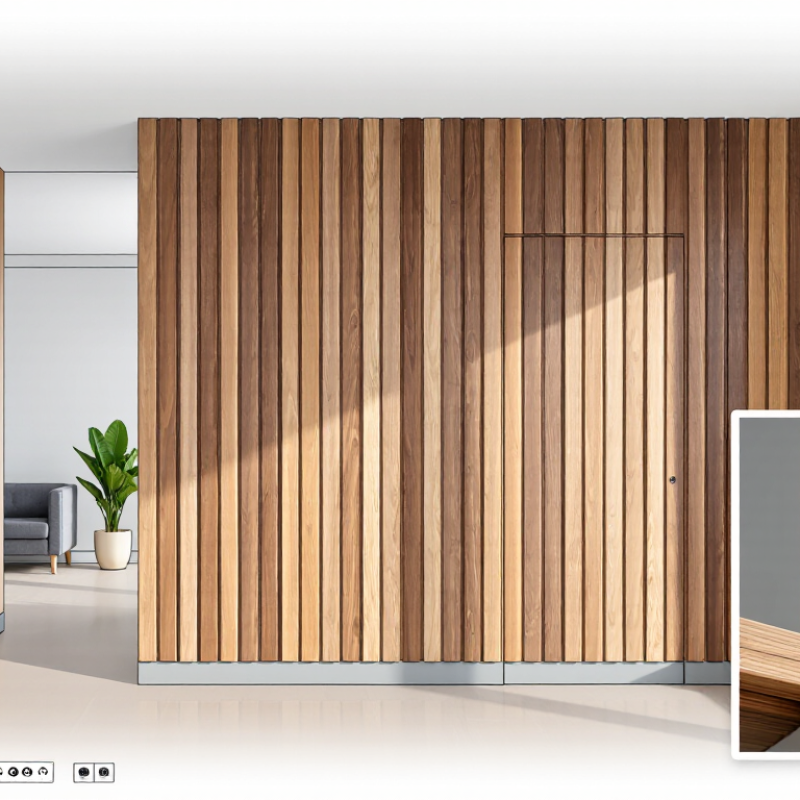
Before choosing fluted wood wall panels, define where they will go and what they must do. A dry living-room feature wall has different demands from a busy corridor, reception area, or humid bathroom. Note the wall’s dimensions, substrate, expected contact, cleaning routine, and exposure to sunlight or moisture. Also decide whether the panels are mainly decorative or must support acoustic performance. Grooves can soften reflections, but they do not guarantee sound control; request tested assembly data for the exact panel, backing, and installation method. Check fire and emissions documentation against your project’s requirements.
Material choices matter. The World Green Building Council estimates that buildings account for 39% of global energy-related carbon emissions, including emissions from materials and construction. That figure is broad context, not proof that one panel type is automatically sustainable. Ask suppliers for the panel’s core composition, finish, recycled content, and environmental documentation. Then compare maintenance needs with the room’s actual use. A pale, open-grain finish may show fingerprints more readily than expected. Real rooms are messy.
Tips: Bring a sample to the site and view it beside the floor and lighting at different times of day. Measure outlet locations before ordering. For public or high-traffic spaces, confirm impact resistance and replacement availability; attractive grooves can collect dust, and deep profiles may take longer to clean. A small test installation can reveal awkward seams or color shifts before the full wall is covered.
| Project requirement | Typical intended use | Panel considerations | Planning checks |
|---|---|---|---|
| Dry interior feature wall | Living rooms, bedrooms, reception areas, and other normally dry spaces. | Solid wood, veneered panels, or wood-fiber composite panels may be suitable. Choose flute depth and spacing to suit the room scale and desired shadow pattern. | Confirm panel dimensions, wall flatness, fixing method, and whether the finish is factory-applied or site-applied. |
| High-humidity interior | Bathrooms, laundry rooms, or rooms with frequent humidity changes. | Use only products specifically rated by their manufacturer for the expected indoor conditions. Moisture-resistant cores and sealed edges can reduce moisture uptake, but do not make a panel waterproof. | Check the product’s moisture-use guidance, ventilation requirements, edge-sealing details, and exclusions for direct water exposure. |
| Commercial or high-traffic area | Corridors, offices, hospitality spaces, and public-facing interiors. | Consider durable finishes, replaceable sections, and a core appropriate to the project. Deeper grooves can collect dust and may need more frequent cleaning. | Review cleaning instructions, impact expectations, maintenance access, and any applicable fire or building-code requirements. |
| Acoustic improvement | Meeting rooms, studios, home offices, or other spaces where sound reflection is a concern. | Decorative flutes alone do not establish sound absorption. Acoustic performance depends on the complete assembly, including backing, cavity, insulation, and tested panel configuration. | Request test data for the exact assembly and installation method; do not infer acoustic ratings from appearance alone. |
| Wall substrate and fixing | New construction, renovation, or installation over an existing wall. | Panel weight, panel format, and substrate condition determine suitable mechanical fixings or adhesive systems. Some installations require battens to create a level fixing plane. | Locate framing and services, verify the substrate is sound and dry, and follow the panel manufacturer’s fixing schedule. |
| Appearance and scale | Projects with a specific visual rhythm, room proportion, or joinery layout. | Flute width, depth, spacing, panel direction, and wood-grain orientation affect the finished appearance. Sample panels help reveal color and shadow variation. | Review samples under the room’s lighting and plan joints, corners, outlets, and transitions before ordering. |
| Finish and maintenance | Spaces with different cleaning routines, touch frequency, or exposure to sunlight. | Clear, stained, or painted finishes vary in appearance and maintenance needs. Wood color and grain can vary naturally; sunlight may change the appearance over time. | Check care instructions, finish repair options, batch consistency, and any stated limits on cleaners or UV exposure. |
| Ordering and installation conditions | Projects with multiple walls, large panel runs, or scheduled installation. | Allow for cuts, pattern alignment, and any manufacturer-recommended acclimation. The required allowance depends on layout and product format. | Measure the finished area, confirm quantities and lead times, inspect delivered panels, and follow installation guidance before cutting. |
Specifications vary by product and installation. Confirm suitability, code compliance, and performance claims with the panel documentation and project professional.
Consider the room’s size, moisture, sunlight, cleaning needs, and expected contact. A living-room wall differs from a busy corridor.
Grooves may soften sound reflections, but they do not guarantee sound control. Ask for test data covering the panel, backing, and installation method.
Review fire and emissions documents against project requirements. Ask about the panel core, finish, recycled content, and environmental documentation.
Bring a sample to the site. View it beside the floor under morning and evening light; pale finishes may reveal fingerprints.
Measure each wall in several places, including height, width, openings, and outlet locations. Older walls can wander.
Confirm actual width, length, thickness, and usable coverage. Sketch flute direction and cut locations to avoid narrow pieces near corners.
Check whether panels attach to studs, battens, or backing. Confirm fasteners, expansion gaps, adhesive compatibility, and acclimation instructions.
A trial fit can expose awkward seams around doors or corners. A straightedge may also reveal a bowed wall that the drawing missed.
Not always. Deep grooves can collect dust and take longer to clean, especially in high-traffic rooms.
Yes. A small test installation can reveal color shifts, seam issues, or unexpected fit problems before the full wall is covered.
Choosing Fluted Wood Wall Panels starts with defining the project’s purpose, location, and desired visual effect. Consider whether the panels will serve as a decorative feature or cover a larger wall, and assess the room’s conditions and practical needs. Compare profile shapes, groove spacing, panel construction, and wood species to find an option that suits the design while offering appropriate durability. Finishes can influence color, texture, and upkeep, so consider how each choice will look in the space and perform over time.
Before deciding, check panel dimensions, coverage, and installation requirements, including the condition of the wall and any necessary preparation. Compare the total project cost—not just the panel price—with your budget, installation needs, and expected maintenance. A well-chosen panel balances appearance, performance, ease of installation, and long-term care, helping ensure the finished wall fits both the project’s style and practical requirements.

 Qianbang