Choosing a Wpc Fluted Panel manufacturer requires more than comparing glossy catalogs and low quotations. Global buyers need dependable evidence, consistent production, and clear communication. This guide introduces ten manufacturers serving international markets. It considers material quality, design capability, and export experience. Each company is assessed through practical buyer concerns. These include panel dimensions, surface finish, color stability, packaging, lead times, and after-sales support. Small details matter. A damaged corner can delay an entire installation.
The selection approach combines supplier information, product specifications, market reputation, and publicly available quality evidence. Buyers should verify samples, technical data sheets, environmental claims, and test reports independently. Manufacturing equipment can reveal useful clues. However, it cannot replace real performance testing. Experienced suppliers should explain the wood-plastic composition, fluted profile, installation method, and maintenance requirements clearly. They should also disclose when customization affects cost or delivery time. Honest communication often matters more than polished sales language.
This overview supports distributors, architects, contractors, and project purchasers managing cross-border orders. It does not treat every manufacturer as equally suitable. Climate, building use, budget, and local compliance requirements can change the best choice. No ranking is permanently perfect. Supplier capabilities change, and public information may become outdated. Readers should request current samples and written quotations before committing. With careful comparison, Wpc Fluted Panel products can enhance feature walls, ceilings, interiors, and commercial spaces with textured appearance and practical performance. Some claims still require closer review. That is where careful buyers gain an advantage.
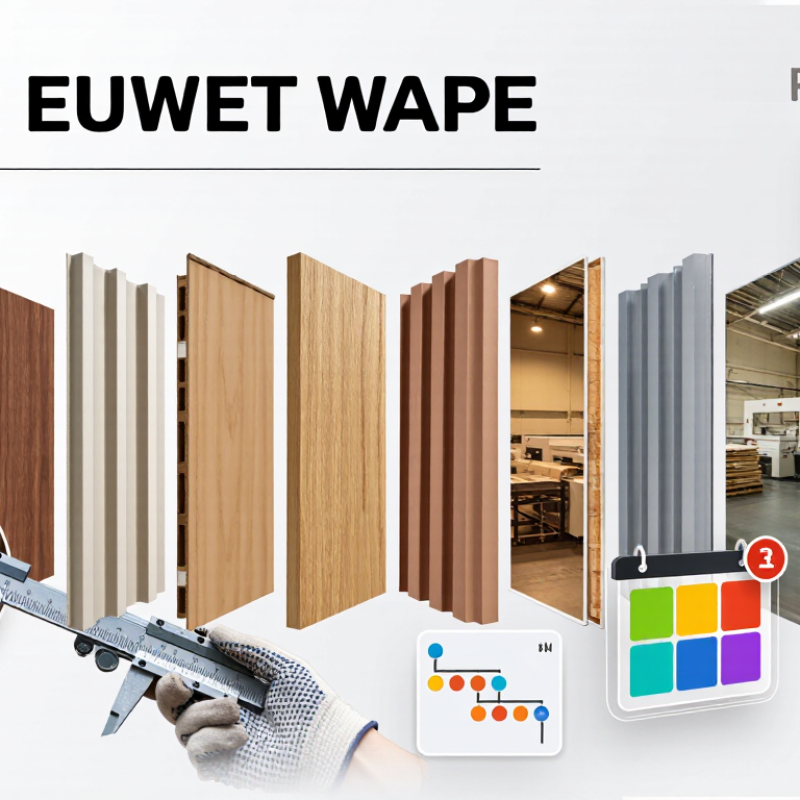
WPC fluted panels are decorative wall or ceiling boards made from wood fibers, thermoplastic polymers, and additives. Their repeated grooves create shadow lines, adding texture without heavy masonry work. Typical applications include living rooms, hotel corridors, offices, reception areas, and acoustic feature walls. They are not solid timber, and that distinction matters.
According to Grand View Research, the global wood plastic composites market was valued at about USD 7.14 billion in 2022. The report forecasts an 11.4% CAGR from 2023 to 2030. Allied Market Research estimated USD 5.3 billion in 2021 and projected USD 11.4 billion by 2030. Different figures reflect different product definitions. Buyers should notice that.
Global buyers often choose WPC fluted panels for consistent dimensions, fast installation, and easier maintenance than many natural wood surfaces. Their polymer content can improve resistance to moisture, insects, and daily stains. However, performance depends on formulation, surface film, density, and edge sealing. “Water-resistant” does not mean waterproof. Poor ventilation can still cause trouble.
A practical inspection should include panel weight, groove accuracy, formaldehyde documentation, fire-test reports, color stability, and batch samples. Ask for installation tolerances. Check how the panel reacts after repeated humidity changes. Some products look excellent under showroom lighting but reveal uneven lamination at window angles. That is an uncomfortable detail, yet it protects purchasing decisions. Suppliers should provide traceable test methods, clear warranty terms, and installation guidance suited to the destination climate.
Choosing among the 10 best WPC fluted panel manufacturers requires more than comparing prices. Global buyers should examine production experience, material knowledge, and quality control systems. Ask how long the factory has produced WPC panels. Request technical data for density, thickness, surface coating, moisture resistance, and color stability. A reliable manufacturer should explain these details clearly, without vague promises.
Study physical samples under natural light. Check whether the flutes are even, the edges are clean, and the core feels consistent. Test several batches if possible. One sample may look excellent, while later production varies. Factory audits can reveal storage conditions, extrusion equipment, inspection records, and packaging methods. Confirm export experience, loading procedures, lead times, and after-sales support. Independent test reports add confidence, but their scope should match the actual product. A certificate alone proves little.
Tips: Compare written specifications, not attractive photos. Ask for batch inspection records and a sample approval process. Check how panels are protected inside cartons, especially against humidity and corner damage. Request references from buyers in similar climates. Clarify warranty exclusions before ordering. No evaluation is perfect. Even experienced buyers can overlook installation conditions, color differences, or changing raw material quality. A small trial order may expose weaknesses before a larger commitment. Clear communication matters as much as factory scale.
International buyers evaluating ten leading WPC fluted panel manufacturers need more than attractive catalog images. Performance begins with material consistency, documented testing, and repeatable production controls. Inspect panel density, groove alignment, surface texture, and dimensional tolerance. Small variations can complicate installation across large commercial walls.
Reliable manufacturers provide recent technical data, moisture resistance results, UV-aging information, and applicable fire-performance documentation. They should explain the wood-polymer ratio clearly. Ask for physical samples, not only digital photographs. Compare color stability under direct light, edge quality after cutting, and screw-holding strength. Packaging also matters. Reinforced corners and moisture-resistant wrapping can prevent costly damage during long-distance shipping.
Manufacturing experience becomes visible in the questions a supplier asks. A capable team checks climate, installation method, wall movement, and expected traffic before recommending a profile. Regional temperature changes may expose weak formulations. That detail is easy to overlook. International buyers should also verify production capacity, lead times, replacement procedures, and communication records. Certifications deserve careful review because documents may be outdated or limited to one product range. A sample may look excellent and still fail during transport or installation. No manufacturer is perfect, so transparent limitations are often more trustworthy than exaggerated claims.
Choosing among the 10 best WPC fluted panel manufacturers requires more than comparing catalog prices. Grand View Research valued the global wood-plastic composites market at about USD 7.2 billion in 2023, with continued growth expected through 2030. This expansion attracts both capable producers and inconsistent suppliers. Request samples with identical dimensions, then inspect groove depth, edge straightness, surface color, and moisture movement. A 2-metre panel should not visibly bow on a flat floor. Ask for batch numbers and test reports covering water absorption, flexural strength, impact resistance, and fire performance. EN 15534 and ASTM D7031 can help structure technical comparisons, but compliance claims still need independent verification.
Pricing should include packaging, tooling, loading, spare panels, and destination delivery. A low quotation may hide thin wall sections or unstable recycled content. Compare the price per usable square metre, not per piece. Certification also needs careful checking. ISO 9001 supports process control, while environmental claims should identify the recycled content percentage and verification method. Industry sustainability reports increasingly stress traceability, yet many quotations remain vague. That is a problem worth challenging.
Tips: Ask for a recent third-party laboratory report, not a self-made datasheet. Confirm production lead time in writing, including holidays and inspection delays. Test one installed corner before approving bulk production. Customer support matters here. Look for responsive engineering answers, clear installation drawings, replacement procedures, and a named contact after delivery. Some manufacturers promise “custom service” but cannot revise a simple profile drawing. That weakness is easy to miss. A small pilot order may reveal more than a polished factory presentation.
This procurement scorecard uses a 100-point evaluation model for global buyers. It compares the factors that most directly affect long-term performance, compliance, landed cost, and supplier reliability. The scores are evaluation weights, not company-specific results.
Interpretation: Product quality and technical consistency receive the highest weight because they influence durability, dimensional stability, finish quality, and installation results. Pricing is assessed as total landed cost, including packaging, freight, duties, and potential replacement costs. Certifications and customer support help reduce compliance, communication, and after-sales risks.
Selecting among the 10 best WPC fluted panel manufacturers starts with a clear project brief. Define panel width, flute depth, surface finish, color tolerance, fire performance, and installation method. Request technical data sheets, test reports, production photos, and recent export references. A polished website proves little. A consistent sample often proves more.
Order samples before discussing large quantities. Check the panel by hand: edges should be clean, grooves should remain even, and the surface should resist light scratching. Measure thickness at several points. Ask how the manufacturer controls recycled content, moisture, batch color, and dimensional changes. My first supplier shortlist was too broad, and I overlooked packaging quality. That mistake could have caused damaged corners during sea transport.
Compare quotations using the same specifications and delivery terms. Confirm minimum order quantity, sample charges, lead time, payment stages, and carton or pallet dimensions. Ask for a pre-production sample and approve it in writing. An independent inspection before shipment can verify quantity, color, thickness, labels, and packing. Keep every drawing and revision in one file. Small changes matter.
For importing, confirm the destination country’s documentation requirements with a qualified customs professional. Review the commercial invoice, packing list, origin documents, and transport insurance. Choose packaging with corner protection, moisture barriers, and clear pallet markings. Do not select the lowest price automatically. A cheaper panel may create higher installation waste, slower claims, or uneven replacement batches. Some lessons arrive late. Better checks usually cost less than corrections.
A practical, brand-neutral shortlist framework based on commonly published WPC panel specifications, export requirements, and buyer verification criteria. Confirm current specifications, certifications, pricing, and production capacity directly before placing an order.
| Rank | Manufacturing Region | Recommended Buyer Profile | Typical WPC Composition | Common Panel Dimensions | Typical Thickness | Surface Options | Typical MOQ | Indicative Production Lead Time | Export & Quality Documents to Request | Key Selection Advantage |
|---|---|---|---|---|---|---|---|---|---|---|
| 01 | China — Coastal Export Hubs | Importers seeking broad customization and container-load purchasing | Wood fiber or wood flour blended with PVC or PE resin; stabilizers and pigments may be added | Commonly 2,900–3,000 × 150–220 mm | 21–30 mm | WoodgrainMattePaintableLaminated | Usually 100–500 pieces per color or profile | 15–30 working days after artwork and deposit approval | Technical data sheet, batch test report, packing list, commercial invoice, certificate of origin, fumigation statement where applicable | Wide profile selection, private-label flexibility, and established container export infrastructure |
| 02 | China — Interior Materials Clusters | Interior contractors requiring decorative wall systems and coordinated trims | Extruded wood-plastic composite with decorative film or coated surface | Commonly 2,900–3,000 × 160–210 mm | 22–30 mm | Wood veneer lookPET filmAcoustic backing | Often 100–300 pieces per specification | 20–35 working days for customized finishes | Color approval sample, surface adhesion test, dimensional tolerance data, installation guide, carton specifications | Strong visual consistency and availability of matching corner, end-cap, and joining accessories |
| 03 | Vietnam | Buyers prioritizing wood-based aesthetics and diversified Asian sourcing | Wood fiber and thermoplastic composite; formulation varies by resin type and wood content | Commonly 2,900 × 150–200 mm | 20–28 mm | Embossed woodgrainCo-extruded capUV finish | Usually 200–500 pieces per color | 20–40 working days | Material declaration, moisture and density data, UV-resistance information, palletization details, export packing photos | Competitive regional sourcing option with growing export capability |
| 04 | India | Projects requiring made-to-order colors, profiles, and regional service support | Wood polymer composite based on recycled or virgin polymer and processed wood fiber | Commonly 2,900–3,000 × 140–200 mm | 20–30 mm | CoatedTexturedCustom color | Often 100–300 pieces per profile | 20–45 working days | GST or export registration details where relevant, product test report, installation instructions, packing specification, origin documents | Flexible customization and suitability for South Asian and Middle Eastern project supply |
| 05 | Turkey | European, Middle Eastern, and North African buyers seeking shorter regional transit | Extruded WPC profile with decorative coating, foil, or painted finish | Commonly 2,800–3,000 × 150–200 mm | 21–28 mm | MattWood effectPaint-ready | Typically 100–300 pieces per finish | 15–30 working days | CE applicability review, product performance declaration where applicable, technical drawings, packing list, origin certificate | Geographic proximity to Europe and the Middle East can simplify replenishment and reduce transit distance |
| 06 | Malaysia | Commercial interiors and hospitality projects requiring humid-climate suitability | Wood-plastic composite profile formulated for interior decorative applications | Commonly 2,900 × 150–210 mm | 20–30 mm | Moisture-resistant finishEmbossedLaminated | Usually 100–300 pieces per specification | 20–40 working days | Water absorption data, dimensional stability test, surface abrasion data, installation method, export packaging specification | Relevant option for tropical and humid markets when product testing supports the intended application |
| 07 | Indonesia | Buyers seeking wood-inspired decorative materials for residential and hospitality use | Wood fiber/polymer extrusion with decorative surface treatment | Commonly 2,900 × 150–200 mm | 21–28 mm | Natural wood lookGroovedCustom stain | Often 100–500 pieces per design | 20–45 working days | Wood-fiber source statement, moisture data, pest-control documentation where required, product drawings, loading photos | Useful regional option for Southeast Asian distribution and interior renovation projects |
| 08 | Poland and Central Europe | European buyers prioritizing regional logistics and documented compliance | WPC or polymer-based decorative profile; exact composition depends on the product series | Commonly 2,600–3,000 × 150–200 mm | 20–30 mm | Fire-rated optionsPaintedAcoustic systems | Frequently 50–200 pieces per profile | 10–30 working days for standard items | REACH-related declarations where applicable, fire classification report, technical file, installation manual, European pallet specification | Potentially shorter European delivery times and easier access to regional compliance documentation |
| 09 | United Arab Emirates | Gulf-region contractors needing local stock, project delivery, or rapid replacement | Imported or locally distributed WPC decorative panels and accessory systems | Commonly 2,900 × 150–200 mm | 21–30 mm | UV-stable surfaceWoodgrainHeat-conscious colors | Stock orders may be available from 20–100 pieces | Stock delivery varies; customized orders commonly require 20–45 working days | UV and temperature data, country-of-origin documents, local conformity requirements, storage instructions, batch identification | Local availability and regional distribution can reduce project downtime in Gulf markets |
| 10 | North America | Architectural and commercial buyers requiring documented project specifications | WPC or polymer composite decorative wall profile; formulations differ by manufacturer and application | Commonly 94–118 in × 5.5–8.5 in equivalent profiles | Approximately 0.75–1.25 in | PaintablePre-finishedAcoustic backing | Stock programs may start at 20–100 pieces; custom production varies | 10–35 working days for standard or made-to-order products | Fire-performance information, VOC or emissions documentation where applicable, SDS, installation instructions, warranty terms | Potentially strong technical documentation and compatibility with local commercial specification processes |
Buyer verification checklist: Request a physical sample, confirm panel weight and density, test color and surface adhesion, review moisture and dimensional-stability data, verify fire-performance requirements for the project, compare packaging and container loading plans, and obtain a signed pro forma invoice before payment. Lead times, MOQs, certifications, and specifications vary by factory, profile, finish, season, and order quantity.
Request identical samples from each supplier. Check groove depth, edge straightness, surface texture, and panel thickness. A two-metre panel should lie flat. Small curves can complicate wall installation. Measure several points, not just the center.
Ask for recent test reports covering water absorption, flexural strength, impact resistance, and fire performance. Request batch numbers and testing dates. Confirm that each document matches the offered product. Old paperwork proves little.
Inspect the edges after cutting. Run a fingernail lightly across the surface. Compare color under direct sunlight. Test screw holding on a spare piece. The sample may look excellent, yet the production batch may differ.
Compare the cost per usable square metre. Include packaging, tooling, spare panels, inspection, loading, and delivery. Check minimum order quantities and sample charges. A cheap quotation can hide thin sections or high installation waste.
Strong packaging protects corners and surfaces during long-distance transport. Look for reinforced corners, moisture barriers, and clear pallet markings. Photograph packed goods before shipment. Damaged edges create delays and replacement discussions.
Ask about recycled content, moisture control, batch color, and dimensional tolerance. Request production photos and a pre-production sample. Approve the sample in writing. Keep every drawing and revision together. I once trusted verbal changes, and that was careless.
Check the certificate number, issue date, product range, and testing organization. Process certification does not automatically prove panel performance. Environmental claims should state recycled content and verification methods. Some documents look impressive but remain too general.
Ask practical engineering questions before ordering. A capable team should discuss climate, wall movement, installation methods, and traffic levels. Request installation drawings and replacement procedures. Try revising one profile drawing. The response can reveal more than a polished presentation.
Confirm lead time, holidays, inspection delays, and delivery terms in writing. Review invoices, packing lists, origin documents, and transport insurance with a qualified customs professional. Inspect one installed corner before bulk approval. A small pilot order often exposes hidden weaknesses. Better checks usually cost less than corrections.
This guide explains what a Wpc Fluted Panel is and why it has become a practical choice for global buyers seeking attractive, durable, and low-maintenance wall and ceiling solutions. It explores the benefits of wood-plastic composite materials, including moisture resistance, dimensional stability, easy installation, and design flexibility. The article also outlines the key factors buyers should consider when evaluating manufacturers, such as production capacity, material consistency, surface finish, customization options, quality control, certifications, export experience, and after-sales support.
It presents ten leading types of manufacturers for international sourcing and offers a clear framework for comparing product quality, pricing, lead times, packaging, documentation, and customer service. Finally, the guide provides a step-by-step approach to defining project requirements, requesting samples, verifying supplier capabilities, reviewing quotations, confirming shipping terms, and managing product inspections. This helps buyers select a reliable partner and import suitable panels with greater confidence and efficiency.

Qianbang