Finding the best China Fluted Mdf Panels requires more than comparing online prices. The right supplier must balance material quality, design accuracy, production capacity, and dependable service. A beautiful sample means little if the finished shipment arrives warped, chipped, or poorly packed.
This guide explores where buyers can source reliable fluted MDF panels from China. It focuses on manufacturers, specialized exporters, and established building-material platforms. Key checks include MDF density, flute spacing, panel thickness, surface finish, formaldehyde testing, and moisture resistance. Ask for recent factory photographs and physical samples. Inspect the grooves closely. Clean edges matter.
Supplier experience also deserves attention. A capable manufacturer should explain its core-board options, veneer or laminate treatments, packaging methods, and quality-control process. Certifications can support trust, but they should be verified rather than accepted blindly. Request test reports that match the actual product, not an unrelated model.
Communication reveals practical expertise. Can the supplier answer technical questions clearly? Can it confirm tolerances, minimum order quantities, lead times, and replacement policies? These details often prevent expensive misunderstandings. Freight planning matters too, especially when panels require corner protection and moisture-resistant wrapping.
No supplier is perfect. Even experienced buyers can overlook color variation or installation waste. That is why this guide considers both strengths and risks. It aims to help architects, contractors, furniture makers, and importers make a careful purchasing decision. The lowest quotation may not deliver the lowest total cost. Reliable results usually come from documented quality, honest communication, and consistent production.
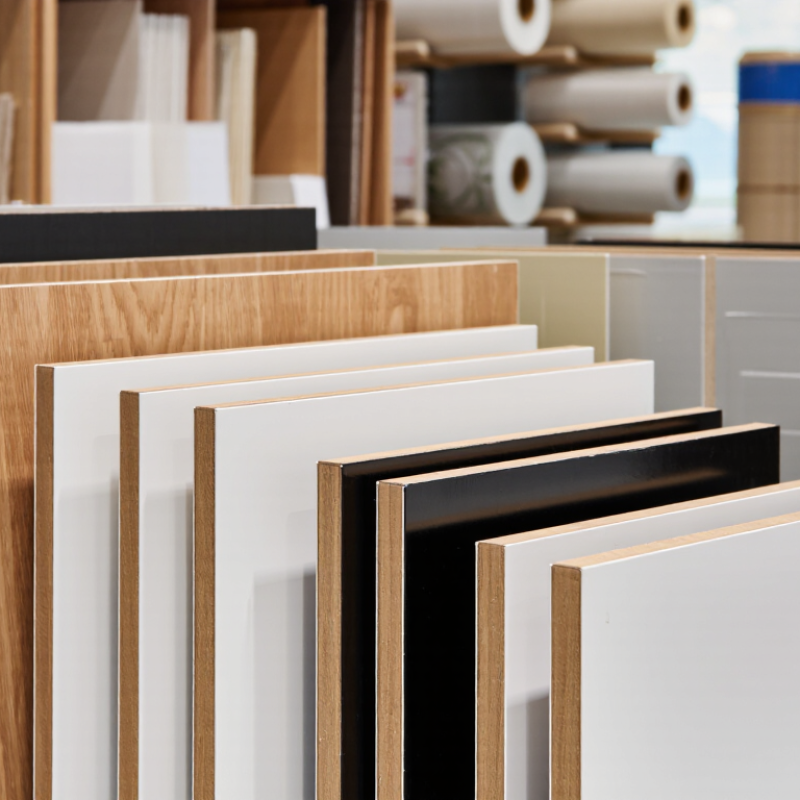
The best fluted MDF panel is not simply the smoothest sample. I define quality through measurable density, flute accuracy, and stable production control. A practical target is 600–800 kg/m³. Panels below this range may feel weak around the grooves. Heavier boards can be harder to machine and transport. Ask suppliers for recent density reports, not general claims. Independent laboratory testing adds confidence.
Flute accuracy matters during installation. Check the flute pitch, depth, width, and spacing with a caliper on several areas. The grooves should remain consistent near edges and corners. Request a full-size sample, because small samples can hide warping or uneven machining.
I would also inspect the raw board behind the decorative surface. One mistake I made early was judging only appearance. It looked excellent, but the grooves varied enough to create visible alignment problems.
Tips: Compare samples from different production batches. Measure density after conditioning the panel indoors. Confirm moisture resistance for the intended room. Ask how rejected panels are controlled. A reliable supplier should provide tolerances, test records, packaging details, and clear replacement terms. Do not accept vague phrases such as “premium quality.” A short video of factory production helps, but it cannot replace physical testing. Even careful buyers can miss small defects, especially under showroom lighting.
When sourcing fluted MDF panels from China, compliance should guide the purchase. A polished surface means little if the panel lacks reliable documentation. Ask suppliers to provide current test reports for EN 622-5, CARB Phase 2, and TSCA Title VI. These standards address panel performance and formaldehyde emissions. The reports should identify the manufacturer, product thickness, testing laboratory, and production date.
Request samples before approving a large order. Inspect the grooves for consistent depth, clean edges, and firm lamination. Check the panel’s core after cutting. Loose fibers or a sharp chemical odor may require further investigation. A trustworthy supplier should explain the resin system, substrate density, and quality-control process clearly. Independent laboratory results are stronger evidence than a general compliance statement. I have found that small documentation gaps often become expensive delays later.
Tips: Match the report to the exact panel construction. A certificate for plain MDF may not cover a fluted, laminated product. Confirm whether the test applies to the finished panel, not only its raw board. Ask for a recent batch traceability record. Also verify packaging conditions, because moisture can affect panel stability during shipping. Do not rely on photographs alone. A careful review may feel slow, but it protects indoor air quality and project credibility.
MOQ changes the real purchase cost. Some factories quote 100 panels, while others require a full container or mixed colors. Ask whether the MOQ applies per design, finish, or total order. Small projects may pay more per panel, but excess stock creates storage problems. It matters. Request a written quotation with packaging, spare panels, and delivery terms included.
Lead time also needs written detail. Request separate dates for sample approval, production, inspection, and loading. Standard panels may take several weeks, while custom spacing or fire-rated cores usually add time. Confirm how delays are reported. Vague promises are risky.
Factory audits provide stronger evidence than polished product pages. Review production capacity, dust control, panel storage, calibration records, worker safety, and quality checkpoints. A live video tour helps, but an independent audit is more reliable. Ask for recent corrective-action records, not just a pass result. Audit reports can be incomplete, too. Verify the factory address, legal entity, testing laboratory, and batch traceability before placing a deposit.
When I screen China fluted MDF panels, I do not choose by photos or veneer color. I ask suppliers for full-size test pieces, production dates, and independent laboratory reports. The key air-quality target is no more than 0.05 ppm formaldehyde. Ask how the figure was measured. Chamber size, conditioning time, temperature, and sampling location can change results. A clear report names the test method and sample construction. Small details matter.
For durability, request evidence from a 1,000-cycle surface test. Confirm the load, rubbing material, moisture exposure, and failure standard. “1,000 cycles” sounds precise, but methods differ. A panel may pass dry abrasion yet mark easily near a kitchen sink. I inspect grooves, edges, and painted surfaces under angled light. Scratches often hide in flat photographs. The supplier should identify the core density, adhesive system, finish, and batch number.
The safest purchasing route is a factory or specialist exporter willing to send sealed samples before a bulk order. I compare two or three samples from different batches. I also request retesting when the finish changes. That step costs time. It can prevent costly surprises. My own checks are not a substitute for laboratory testing. Reports can be incomplete, and sample results may not represent every shipment. Use written specifications, retained samples, and an inspection clause. Choose the source that answers technical questions clearly, not the one promising the lowest price.
| Sample ID | Panel Construction | Nominal Size | Flute Profile | Surface Finish | Formaldehyde Result (ppm) |
1,000-Cycle Surface Test | Density (kg/m³) |
Moisture (%) |
Dimensional Change (%) |
Preliminary Result |
|---|---|---|---|---|---|---|---|---|---|---|
| CN-FMDF-01 | Moisture-resistant MDF with decorative veneer | 2,440 × 1,220 × 18 mm | 27 mm pitch × 9 mm depth | Clear matte coating | 0.021 | 1,000 cycles; no through-coating wear | 735 | 6.8 | 0.18 | Pass |
| CN-FMDF-02 | Standard MDF with paint-grade face | 2,440 × 1,220 × 18 mm | 30 mm pitch × 8 mm depth | Water-based polyurethane | 0.034 | 1,000 cycles; light gloss change only | 720 | 7.2 | 0.23 | Pass |
| CN-FMDF-03 | High-density MDF with PET film surface | 2,800 × 1,220 × 18 mm | 25 mm pitch × 10 mm depth | Textured wood-look film | 0.047 | 1,000 cycles; minor edge scuffing | 760 | 6.4 | 0.16 | Pass |
| CN-FMDF-04 | Standard MDF with melamine surface | 2,440 × 1,220 × 15 mm | 28 mm pitch × 7 mm depth | Embossed melamine | 0.061 | 1,000 cycles; visible coating wear | 705 | 7.8 | 0.31 | Does Not Meet Target |
| CN-FMDF-05 | Moisture-resistant MDF with lacquered face | 2,440 × 1,220 × 18 mm | 40 mm pitch × 12 mm depth | Low-sheen lacquer | 0.028 | 1,000 cycles; slight color change | 745 | 7.0 | 0.21 | Pass |
| CN-FMDF-06 | Lightweight MDF with laminated face | 2,440 × 1,220 × 18 mm | 32 mm pitch × 9 mm depth | Decorative laminate | 0.039 | 780 cycles; localized delamination observed | 665 | 8.1 | 0.42 | Retest Required |
Direct mills suit buyers ordering regular container volumes. They usually offer better control over panel density, groove spacing, veneer matching, and packaging. Ask for production photos, batch records, and a physical sample from current stock.
The FAO Forestry Production and Trade database identifies China as one of the world’s largest wood-based panel producers. Scale helps, but it does not guarantee consistent fluted machining. A low quote can hide weaker cores or thinner decorative layers.
Certified exporters provide a safer middle route. They can combine several factories, arrange inspections, and prepare export documents. Request FSC or PEFC chain-of-custody evidence when responsible sourcing matters.
Also verify formaldehyde results against the destination market’s rules, such as EN 13986 or CARB Phase 2 requirements. Intertek and SGS inspection reports can support reliability, but check the report number directly. Paperwork is not proof by itself.
B2B marketplaces offer fast comparisons and smaller trial orders. They are useful for screening suppliers, not replacing technical due diligence. The International Trade Centre’s Trade Map data can help compare China’s wood-panel export activity with competing origins.
Compare landed cost, not factory price. Include moisture protection, pallet strength, port handling, inspection fees, and replacement terms. I have seen attractive samples fail after shipping because edge protection was too weak. That mistake is expensive.
Before payment, approve a golden sample and define tolerances for thickness, groove depth, color, and warping in writing.
A practical target is 600–800 kg/m³. Lower density may weaken the grooves and edges. Higher density can increase machining and shipping costs. Ask for recent density reports.
Measure flute pitch, depth, width, and spacing with a caliper. Check several areas, including corners and edges. The grooves should remain evenly aligned. Measure twice.
Small samples may hide warping, uneven grooves, or edge problems. A full-size panel shows alignment across the entire surface. Inspect the raw board behind the decorative layer. Photos mislead.
Request test results showing no more than 0.05 ppm formaldehyde. The report should state the test method and conditioning time. It should also identify temperature, chamber size, and sampling location. A vague number is not enough.
Request evidence from a 1,000-cycle surface test. Confirm the load, rubbing material, moisture exposure, and failure standard. Inspect grooves, edges, and finished areas under angled light. Dry testing may miss sink-area problems.
Direct mills may suit buyers needing consistent, repeated production. They can often control density, groove spacing, finish, and packaging. Still, factory scale does not guarantee accurate machining. Check current samples.
Certified exporters may arrange inspections, documents, and mixed production. Marketplace suppliers help with quick comparisons and smaller trial orders. Neither option removes the need for physical testing. Paperwork is not proof.
Compare landed cost, not only the factory price. Include moisture protection, pallet strength, port handling, inspections, and replacements. Weak edge protection can damage panels during shipping. I learned this late.
Choosing the best Fluted Mdf Panels from China requires more than comparing prices or appearance. Start by defining quality through measurable standards, including an MDF density of approximately 600–800 kg/m³, consistent flute spacing, clean edges, and a stable surface. Suppliers should provide documentation showing compliance with EN 622-5, CARB Phase 2, and TSCA Title VI requirements. Comparing minimum order quantities, production lead times, communication quality, and independent factory audit results can help identify reliable manufacturing partners.
Before placing a large order, request samples and test them for formaldehyde emissions of no more than 0.05 ppm, dimensional stability, surface consistency, and durability through 1,000 cycles of suitable use testing. Buyers may choose direct mills for greater customization, certified exporters for support with quality control and logistics, or B2B marketplaces for broader supplier comparisons. The best option depends on project volume, documentation needs, budget, and the level of inspection and service required.

Qianbang