2026 Top WPC Wall Cladding Manufacturers and Suppliers?

Time:2026-09-19 Author:Mason
0%

Choosing the right Wpc Wall Cladding supplier in 2026 requires more than comparing photographs and advertised prices. This market includes established factories, regional specialists, and newer exporters with different production capabilities. A convincing product page is not enough. Buyers should examine material composition, extrusion quality, surface treatment, testing records, and after-sales support.

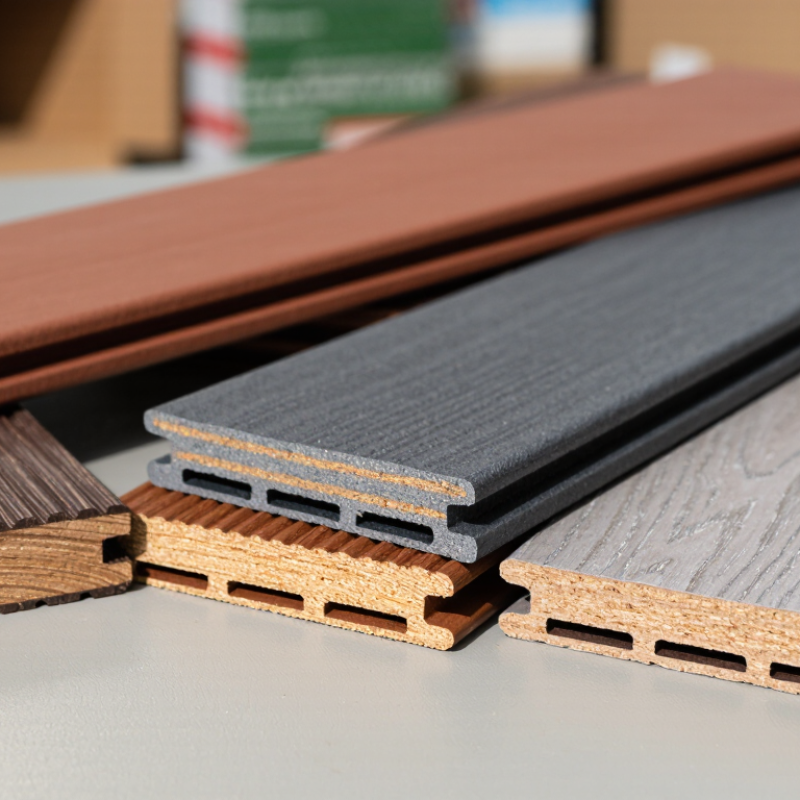
This guide reviews leading WPC wall cladding manufacturers and suppliers through practical purchasing criteria. We consider recycled wood content, polymer consistency, color stability, moisture resistance, fire performance, and thermal movement. Factory experience also matters. A reliable manufacturer should explain its production process clearly, provide current technical data, and offer samples that match delivered batches. Small details can reveal major differences. Check the back profile, edge finish, clip system, and packaging before approving a large order.

Installation conditions deserve equal attention. A coastal project may need stronger moisture protection. A commercial façade may require stricter fire documentation. Long boards can expand under direct summer sunlight, so fixing guidance and joint spacing should never be ignored. Delivery capacity, minimum order quantities, replacement policies, and warranty terms also affect the real project cost.

No ranking is permanently correct. Supplier performance can change with new equipment, management, or raw material sources. Some smaller companies may offer better communication than larger brands. That deserves consideration. Our selection approach therefore balances technical evidence, manufacturing experience, customer feedback, and transparent communication. Readers should still verify certificates, inspect samples, and confirm local building requirements before signing a contract. A polished catalogue helps, but dependable evidence matters more.
2026 Top WPC Wall Cladding Manufacturers and Suppliers?

What Is WPC Wall Cladding and Why Is It Used?

WPC wall cladding is a panel system made from wood fibers and thermoplastic polymers. Manufacturers may also add pigments, stabilizers, and protective layers. This composition creates a surface that resembles timber but needs less routine maintenance. Unlike untreated wood, WPC panels usually resist moisture, insects, and surface cracking more effectively. They are used on exterior walls, balconies, garden rooms, and selected interior areas. The material is practical, not magical.

From installation experience, a stable subframe matters as much as the panel quality. Installers should leave expansion gaps because temperature changes can make boards move slightly. A ventilated cavity can help release trapped moisture behind the cladding. Cutting creates dust, so eye protection and suitable masks remain sensible precautions. Panels should be checked for color variation before installation. Replacing one board later may be difficult if batches differ.

WPC wall cladding is chosen for visual consistency and reduced upkeep. Regular cleaning with mild soap can remove dust, pollen, and light stains. Harsh solvents may damage the protective surface. In hot climates, dark colors can become noticeably warmer under direct sunlight. This point is sometimes overlooked during design. Good suppliers should provide installation guidance, tested performance data, and clear warranty conditions. Buyers should also confirm fire ratings, slip-related limitations, drainage details, and local building requirements before ordering.

Key Criteria for Evaluating WPC Cladding Manufacturers in 2026

2026 Top WPC Wall Cladding Manufacturers and Suppliers?

Key Criteria for Evaluating WPC Cladding Manufacturers in 2026

Market forecasts show strong demand, but reported figures differ. Grand View Research estimates the global wood plastic composites market will grow at about 11% annually through 2030. Such variation requires careful supplier checks. Do not select a manufacturer from market size claims alone. Request resin specifications, wood-fibre content, density, water absorption, and thermal expansion data. ASTM D7031 testing guidance can help compare outdoor composite performance. Independent laboratory reports are more reliable than sales brochures.

A capable manufacturer should explain UV stabilisation, colour consistency, fire behaviour, and installation tolerances. Ask for batch records and samples from current production. A small sample may look excellent, yet full-length boards can reveal warping or uneven embossing. Check whether the supplier follows a certified quality system, such as ISO 9001, and whether environmental claims include evidence. The ISO 14025 framework supports transparent environmental declarations. Also review recycled-content documentation, packaging practices, warranty limits, and replacement procedures. Those details often expose operational weakness.

Tips: Test panels outdoors for at least several weeks. Measure colour change, fastener movement, surface temperature, and drainage after rain. Compare delivered weight with the declared density. Keep written records. One overlooked issue is local technical support; installation errors can appear to be product failures. A manufacturer may offer attractive pricing but provide unclear fixing diagrams. That is a warning sign. Select suppliers that disclose limitations, not only strengths. Imperfect information deserves extra questions.

This 100-point screening model highlights the criteria buyers can use to evaluate WPC wall cladding manufacturers and suppliers in 2026. Durability, technical compliance, weather resistance, fire and moisture performance, sustainability, warranty transparency, and supply capability should be verified through documented test reports, applicable standards, samples, and project references. Relevant assessment frameworks may include EN 15534, ASTM D7031, EN 13501-1, ISO 4892-3, and ASTM G154.

Leading Global WPC Wall Cladding Manufacturers and Suppliers

Global demand for WPC wall cladding is gaining momentum as developers seek lower-maintenance exterior surfaces. Grand View Research’s 2024 wood-plastic composites assessment forecasts steady market expansion through 2030, supported by construction renovation and outdoor applications. Fortune Business Insights also identifies infrastructure investment and weather-resistant materials as important growth drivers.

Leading global WPC wall cladding manufacturers and suppliers now compete on more than appearance. Experienced producers use controlled extrusion temperatures, calibrated recycled polymers, and moisture-tested wood fibers. A reliable supplier should provide UV exposure results, water absorption data, slip or surface specifications, and batch traceability. Check the details.

For coastal projects, salt exposure can reveal weak formulations within months. In colder regions, repeated freeze-thaw cycles may cause hidden movement around fasteners. Suppliers with ISO 9001-based quality systems often offer stronger process control, but certification alone cannot prove long-term performance. ASTM and EN test results should match the intended installation environment.

Product selection also requires practical site evidence. Review color consistency across several cartons, inspect tongue-and-groove tolerances, and request installation guidance for ventilation gaps. The International Energy Agency’s buildings research continues to emphasize renovation efficiency and material durability, yet embodied carbon comparisons remain inconsistent across WPC products. That deserves caution.

Some manufacturers publish impressive recycled-content percentages without explaining resin sources or testing boundaries. Buyers should ask direct questions. Who verifies the data? How often are batches tested? A sample panel installed outdoors can reveal more than a polished brochure.

Comparing WPC Cladding Products, Certifications, and Services

2026 Top WPC Wall Cladding Manufacturers and Suppliers

Comparing WPC Cladding Products, Certifications, and Services

Choosing WPC wall cladding requires more than comparing colors and prices. In project reviews, I examine board density, surface texture, moisture resistance, and dimensional stability. A sample may look convincing under showroom lighting. It can appear different outdoors after rain and heat exposure.

Product comparison should include panel thickness, installation method, fastener compatibility, and maintenance requirements. Some boards have realistic wood grain, while others show repeated patterns across large walls. That detail matters. Check technical data for water absorption, flexural strength, UV resistance, and fire performance. Ask whether test results apply to the current production batch, not an older model.

Certifications also need careful verification. Reliable suppliers should provide traceable reports from recognized laboratories. Depending on the market, useful documents may include ISO 9001, EN 13501-1 fire classification, ASTM E84 results, or responsible material sourcing records. A certificate alone proves little without its scope, date, and issuing body. This is where many comparisons become too optimistic.

Service quality often separates a dependable supplier from a low-cost seller. Request physical samples, installation drawings, color references, packing details, and warranty terms before ordering. Experienced teams can explain expansion gaps and corner treatment clearly. They should also respond when a panel is damaged in transit. I have found that after-sales support is difficult to judge in advance. However, response time during technical questions offers a useful warning sign.

How to Select the Right WPC Wall Cladding Supplier

Choosing the right WPC wall cladding supplier in 2026 requires more than comparing prices. Review the supplier’s production experience, material formula, and quality-control process. Ask for technical data covering density, moisture resistance, UV stability, and surface durability. A reliable supplier should provide recent test reports and clear product tolerances. Vague answers are warning signs.

Request physical samples before placing a large order. Check color consistency, edge accuracy, surface texture, and how panels respond to cutting. If possible, inspect an operating project in a similar climate. Coastal humidity, strong sunlight, and frequent temperature changes can expose weaknesses quickly. A polished sample may still hide uneven backing or poor fastening details. That part is easy to miss.

Tips: Confirm lead times, packaging methods, replacement procedures, and warranty terms in writing. Ask whether the supplier offers installation guidance and spare profiles. Compare a complete delivered cost, not only the panel price. The cheapest option can become expensive after warped boards, delayed shipments, or mismatched batches. Also check whether claimed fire or environmental performance meets local building requirements. Independent verification is better than attractive wording. Leave room for doubt; dependable suppliers welcome practical questions and explain limitations clearly.

2026 Top WPC Wall Cladding Manufacturers and Suppliers? - How to Select the Right WPC Wall Cladding Supplier

Evaluation Dimension Weight Recommended Benchmark for 2026 Evidence to Request from the Supplier Why It Matters
Material Composition 10% Clearly declared wood-fiber and polymer composition, additives, colorants, and recycled content. The formulation should be consistent from batch to batch. Technical data sheet, safety data sheet where applicable, formulation statement, and batch traceability records. Composition directly affects dimensional stability, moisture resistance, appearance, fastening performance, and service life.
Product Standard and Testing 12% Performance claims should be supported by applicable test methods, such as ASTM D7031 and ASTM D7032 for wood-plastic composite materials and decking-related performance evaluation, or EN 15534 where applicable. Complete laboratory reports showing the tested product code, test date, method, specimen condition, and measured results. A standard-number claim without a matching, product-specific report is not sufficient for technical comparison.
Water Absorption and Moisture Stability 10% The supplier should provide water-absorption data and dimensional-change results under controlled moisture conditions. The result must be evaluated against the project exposure level. Water-absorption test report, thickness and width change data, installation gap recommendations, and drainage details. Exterior walls experience rain, humidity, and temperature cycles; poor moisture control can cause swelling, warping, or joint movement.
UV and Weathering Resistance 10% For outdoor use, require accelerated-weathering data using an applicable method such as ASTM G154 or ISO 4892-3, together with a clearly defined appearance acceptance criterion. Weathering report, color-change or grey-scale evaluation, surface-condition photographs, and maintenance instructions. UV exposure can change color, gloss, surface texture, and mechanical performance over time.
Fire Performance 12% Fire classification must match the local building code and the complete wall assembly. For U.S. projects, surface-burning characteristics are commonly evaluated under ASTM E84; other markets may require EN 13501-1 or local classifications. Product-specific fire report, classification document, mounting configuration, substrate information, and limitations of use. Fire results for one installation system cannot automatically be transferred to another wall assembly.
Dimensional Accuracy and Surface Quality 8% Profiles should have controlled thickness, width, length, straightness, color consistency, and surface finish. Tolerances must be stated rather than described only as “high precision.” Dimensional inspection records, approved samples, color standards, defect criteria, and packaging inspection checklist. Consistent dimensions reduce installation waste, visible joint variation, and replacement disputes.
Installation System 10% The supplier should provide a complete system covering substructure, clips or fasteners, ventilation, expansion gaps, corner details, openings, and end treatment. Shop drawings, installation manual, fastener specifications, spacing tables, and project-specific technical support. The cladding profile alone does not determine wall performance; installation details strongly influence durability.
Quality Management and Traceability 8% Documented incoming-material inspection, process control, final inspection, nonconformance handling, and lot identification should be in place. Quality manual, inspection plan, sample inspection records, corrective-action reports, and production-lot labels. Traceability makes it possible to identify affected batches and manage claims efficiently.
Warranty and After-Sales Support 8% Warranty duration, coverage, exclusions, geographic scope, installation requirements, and claim procedures should be stated in writing. Signed warranty document, replacement policy, claims-response procedure, maintenance guide, and project references. A long warranty has limited value if exclusions, installation conditions, or color-change limits are unclear.
Supply Capacity and Delivery Reliability 7% The supplier should confirm production capacity, standard and custom profile availability, minimum order quantity, lead time, packaging method, and replacement-stock policy. Capacity statement, production schedule, order-acknowledgement sample, packaging specification, and delivery performance records. Consistent supply is essential for phased construction and future repairs, especially when colors or profiles are project-specific.
Environmental Documentation 5% Environmental claims should be supported by verifiable information about recycled content, responsible raw materials, emissions, packaging, and end-of-life options. Recycled-content statement, chain-of-custody documentation where relevant, environmental product information, and packaging data. Documented environmental information helps prevent unsupported sustainability claims and supports project certification requirements.
Total Evaluation Weight 100% Use the same evidence requirements and scoring rules for every shortlisted supplier to create a fair comparison.
Recommended scoring method: Score each dimension from 0 to 5, multiply the score by the listed weight, and reject any supplier that cannot provide product-specific evidence for critical areas such as fire performance, weathering, material composition, and installation requirements.

FAQS

What is WPC wall cladding made from?

WPC cladding combines wood fibers with thermoplastic polymers. Pigments, stabilizers, and protective layers may also be included. It resembles timber but usually needs less routine maintenance. The material is practical, not magical.

Where is WPC wall cladding commonly used?

It can cover exterior walls, balconies, garden rooms, and selected interior areas. It suits projects needing a consistent timber-like appearance. Designers should still check local building requirements. Indoor use is not automatically suitable everywhere.

Why are expansion gaps important during installation?

Temperature changes can make panels move slightly. Expansion gaps give boards room to adjust. A stable subframe also supports long-term alignment. Small details matter.

How should WPC cladding be maintained?

Clean the surface with mild soap and water. This removes dust, pollen, and light stains. Avoid harsh solvents because they may damage protective layers. Cleaning is simple, but staining should not be ignored for months.

What should buyers check before choosing a supplier?

Request resin details, wood-fiber content, density, water absorption, and thermal expansion data. Ask for current samples and independent laboratory reports. Review warranty limits, replacement procedures, and packaging practices. Low prices can hide weak support.

How can buyers compare different WPC cladding products?

Compare thickness, texture, installation method, fastener compatibility, and maintenance needs. Also review moisture resistance, flexural strength, UV resistance, and fire performance. Showroom samples can look different outdoors. Test panels in real weather when possible.

Which certificates and test documents may be useful?

Useful documents may include quality-system certification, fire classifications, and recognized laboratory test reports. Check each document’s scope, date, and issuing body. A certificate alone proves little. Evidence must match the current product batch.

What installation problems should project teams anticipate?

Installers should provide drainage behind the panels and maintain a ventilated cavity. Cutting creates dust, so eye protection and suitable masks are sensible. Check color variation before installation. A replacement board may not match later batches.

How do climate and color affect WPC cladding performance?

Dark panels can become noticeably warmer under direct sunlight. This effect is stronger in hot climates. Outdoor testing should measure color change and surface temperature. I might still underestimate local heat without site records.

Conclusion

This guide explains what Wpc Wall Cladding is, how it combines wood fibers with recycled or polymer materials, and why it is increasingly used for durable, attractive, and low-maintenance exterior and interior surfaces. It examines key factors for evaluating manufacturers and suppliers in 2026, including material quality, production capacity, weather resistance, design options, sustainability practices, product consistency, and technical support.

The article also compares cladding products, available finishes, installation systems, warranties, testing procedures, and relevant certifications without focusing on any specific brand. Finally, it provides a practical framework for selecting the right supplier by considering project requirements, climate conditions, customization needs, delivery capability, after-sales service, and total cost. By following these criteria, buyers, designers, and contractors can make informed decisions and identify a dependable Wpc Wall Cladding partner for residential, commercial, and architectural projects.


Mason

Mason

Mason is a seasoned marketing professional with a deep expertise in the company's offerings and a passion for driving brand awareness. With a strong background in digital marketing strategies, he has an innate ability to connect with diverse audiences and effectively communicate product benefits.......