2026 Best Fluted Panel Wood Types for Global Buyers?

Time:2026-10-09 Author:Sophia
0%

Choosing the best Fluted Panel Wood in 2026 requires more than comparing color, price, and online photographs. Global buyers must examine timber species, veneer quality, core stability, moisture movement, acoustic performance, and responsible sourcing. A warm oak panel may suit a hotel lobby, while walnut creates deeper contrast in a private office. Ash offers a lighter grain. Bamboo can provide a different sustainability profile, but its manufacturing quality varies considerably.

Andrew Waugh, a leading timber architect and co-founder of Waugh Thistleton, has said, “Timber is a material that can be grown, not mined.” This principle matters when evaluating modern wall panels. The material’s origin, processing, and service life all influence its environmental value. Buyers should request clear documentation, including species identification, formaldehyde information, finish specifications, and recognized chain-of-custody certification where applicable. A beautiful surface is not enough.

Small details decide long-term performance.

This guide compares the most practical wood types for international projects in 2026. It considers grain appearance, dimensional stability, availability, maintenance, installation conditions, and likely cost differences. It also recognizes an uncomfortable reality: no single species is perfect for every climate or budget. Oak can be dependable, yet supply and finish consistency may differ by region. Walnut looks luxurious, but it usually costs more and can show scratches clearly. Some recommendations may need revision as certification standards, manufacturing methods, and shipping conditions change. Careful buyers should test samples in real lighting and inspect panel edges before placing large orders.
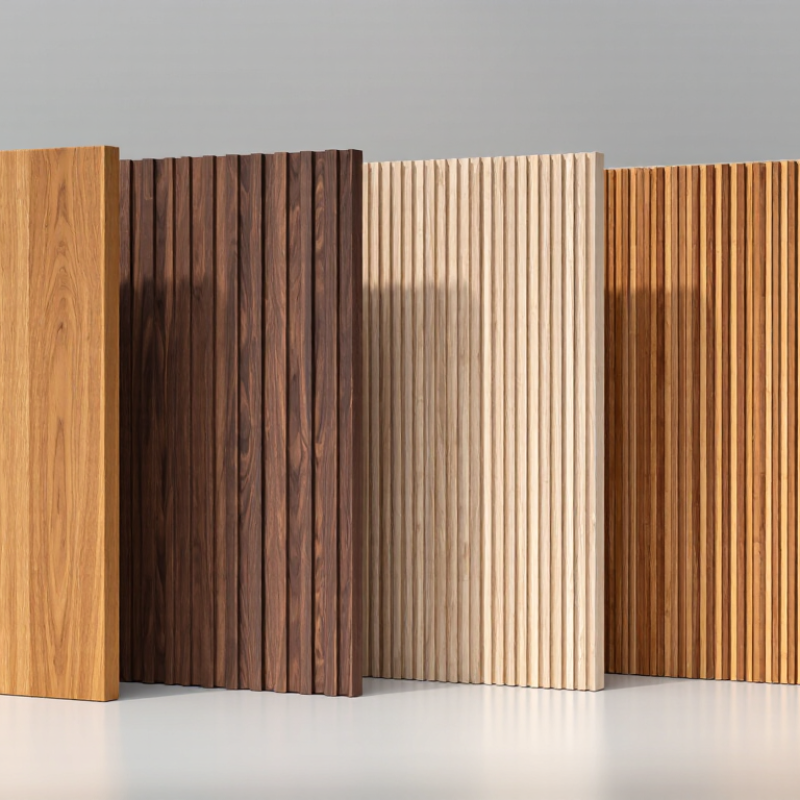
2026 Best Fluted Panel Wood Types for Global Buyers?

Define Fluted Panel Wood Selection: Moisture Content at 8–12%

For 2026 fluted panel sourcing, moisture content deserves more attention than wood color. Oak, ash, walnut, and veneer-faced panels react differently after installation. The USDA Forest Products Laboratory’s Wood Handbook, 2021, reports that wood continually exchanges moisture with surrounding air. Dimensional movement can follow. A stable panel is not simply a dry panel.

Specify 8–12% moisture content at shipment and inspection. This range suits many interior applications, but climate changes the target. Heated winter rooms may pull wood drier. Coastal warehouses may push it higher. Measure several points across each batch, including panel edges and the fluted grooves. ASTM D4442 provides recognized methods for determining wood moisture content. Do not trust one surface reading.

For MDF, plywood, or veneered cores, request testing under EN 322 principles for wood-based panels. The report should identify the core material, sampling location, test date, and equipment calibration. The USDA handbook also explains that wood below fiber saturation responds strongly to humidity changes, making installation conditions important. A panel at 9% can still move after entering a damp building. That detail is often missed.

Ask suppliers to pack panels only after conditioning them near the intended service environment. It costs time. It may prevent open joints, raised edges, and uneven flutes. Yet 8–12% should remain a controlled specification, not a promise without evidence. Samples can mislead. Test the shipment.

Compare Oak, Walnut, Ash, and Beech by Density and Janka Hardness

For global buyers, oak, walnut, ash, and beech offer different balances of strength, weight, and appearance. Density usually refers to wood weight at about 12% moisture content. Janka hardness measures the force needed to press a steel ball halfway into the surface.

Oak Oak commonly ranges from 650 to 770 kg/m³, with a Janka hardness near 5,700–6,000 lbf. It resists dents well and suits high-traffic wall panels.

Walnut Walnut is lighter, around 610–660 kg/m³, and softer at approximately 1,000 lbf. Its deep color creates a premium visual effect, but fluted edges may mark more easily.

Ash Ash usually reaches 650–700 kg/m³ and about 1,300 lbf. Its strong grain can make machining attractive, though tear-out may appear around narrow grooves.

Beech Beech sits near 680–720 kg/m³ and roughly 1,300 lbf, offering a smooth, uniform surface for painted or clear-finished panels.

These figures are practical guides, not promises. Moisture, growth conditions, and drying methods change performance. In panel production, I would inspect both the solid wood and the core material. A dense face cannot correct a weak substrate. Deep flutes also reduce material around each ridge, so hardness alone may mislead buyers. For humid markets, stable kiln drying and sealed end grain deserve equal attention. Beech can perform beautifully, yet it may move noticeably when moisture control is poor. A sample panel should therefore be tested before large-volume purchasing.

Assess Teak, Cedar, and Thermally Modified Wood by Durability Class

2026 Best Fluted Panel Wood Types for Global Buyers?

For outdoor fluted panels, durability class matters more than appearance alone. Teak often reaches Durability Class 1 under EN 350 when genuine heartwood is used. It handles heavy rain, strong sunlight, and repeated moisture changes well. Its dense grain also resists dents around entrances and busy walkways. However, teak is heavy and expensive. Installation needs stronger supports and accurate fixing gaps.

Cedar commonly falls within Class 2, although species, heartwood content, and grading can change performance. It is lighter than teak and easier to machine into clean flutes. Its warm scent and reddish tone suit sheltered façades, ceilings, and balconies. Deep grooves can hold dust and water. Good drainage is essential. I have seen attractive cedar panels fail early when the lower edges touched wet paving.

Thermally modified wood offers a practical middle option. Heat treatment reduces moisture movement and improves biological resistance without chemical preservatives. Many modified softwoods achieve Class 2, while some products may reach Class 1 after verified testing. The result depends on the original species and treatment schedule. Modified wood can become more brittle during machining, especially around narrow flute edges. Request EN 350 data, moisture guidance, coating instructions, and test reports for the exact product. Local humidity still matters. A class rating cannot replace a careful detail drawing.

Verify E1 Formaldehyde Limits of ≤0.124 mg/m³ and FSC/PEFC Compliance

For global buyers, fluted panels should be judged by more than wood appearance. Formaldehyde performance matters in bedrooms, offices, and enclosed retail spaces. Request a current test report showing emissions at or below 0.124 mg/m³ under the stated E1 testing method. The report should identify the panel core, thickness, test laboratory, and production batch. A decorative surface cannot hide a weak substrate.

Tips: Ask for factory samples from the same batch. Check the panel edges, adhesive smell, groove accuracy, and surface stability after handling. Confirm whether the test covers raw boards or finished fluted panels. These details are easy to miss. They matter.

Responsible sourcing also needs evidence. Request FSC or PEFC documentation, including a valid certificate number and chain-of-custody scope. The certificate should match the supplier’s legal entity and the supplied wood-based product. A logo alone proves little. Check the document directly through the relevant certification database. Be cautious when a supplier provides only a general sustainability statement.

Oak, ash, walnut-look veneers, and rubberwood can all suit fluted designs, but wood species does not guarantee low emissions. Adhesives, coatings, and core materials often influence results more strongly. In my experience, buyers sometimes approve attractive samples too quickly. That is a costly weakness. Require production samples, moisture data, packaging details, and independent verification before placing a large order. Standards and market rules can change, so confirm current requirements for the destination country.

2026 Best Fluted Panel Wood Types for Global Buyers

Typical oven-dry density is a practical indicator for comparing fluted-panel substrates: lower-density softwoods are lighter and easier to machine, while higher-density hardwoods generally provide greater mass and surface durability.

For E1 verification, finished panels should demonstrate formaldehyde emissions of ≤0.124 mg/m³ under the applicable test method. FSC or PEFC compliance applies to the certified forest-management and supply chain, so buyers should request valid chain-of-custody documentation for each shipment.

Reference basis: representative oven-dry density values commonly reported in wood engineering handbooks. Actual values vary by species, moisture content, grade, and manufacturing process. Always verify the finished panel’s E1 test report and FSC/PEFC chain-of-custody certificate.

Rank Wood Types by Cost, Supply Stability, Machining, and 2026 Applications

2026 Best Fluted Panel Wood Types for Global Buyers?

For global buyers in 2026, fluted panel selection should start with four practical tests: cost, supply, machining, and use. Pine ranks first for cost and usually offers broad availability across major timber markets. Its soft grain machines quickly, but cutters can raise fibers around narrow grooves. Poplar is a close second. It is light, stable, and easier to paint than many darker woods. Supply is generally dependable, although regional harvest cycles can change lead times. Good value.

Oak ranks higher for appearance and wear, but lower for budget and machining speed. Its harder grain produces crisp flutes, yet tooling wear and production time increase. Walnut offers premium visual depth but weaker supply stability. Reserve it for feature walls, hospitality interiors, and high-end residential rooms. For large projects, veneered MDF often ranks best overall. It keeps dimensions steady, machines cleanly, and supports consistent color matching. Edge damage and moisture exposure remain risks. Do not ignore them.

In 2026, pine and poplar suit volume housing, offices, retail displays, and acoustic wall systems. Oak fits reception areas and durable commercial interiors. Walnut works better selectively, where visual impact justifies higher cost. Before ordering, request samples, core specifications, moisture data, and recent production photos. Confirm groove depth after finishing, not only from a catalog image. Supply forecasts remain uncertain because freight delays can overturn a neat ranking. A low purchase price may become expensive after rejects, delays, or replacement panels.

2026 Best Fluted Panel Wood Types for Global Buyers: Ranking by Cost, Supply Stability, Machining, and Applications

Rank Wood Type / Panel Material Indicative Material Cost
(USD/m³)
Global Supply
Stability
Machining
Suitability
Dimensional
Stability
Moisture
Resistance
Key Advantages for Fluted Panels Recommended 2026 Applications Main Purchasing Considerations
1 Standard MDF
Wood-fibre panel
250–500 Very High Excellent High Low–Medium Uniform density, smooth surface, low knot content, and clean CNC routing for consistent grooves. Interior feature walls, retail displays, office interiors, acoustic backing systems, and painted decorative panels. Use moisture-resistant grades for humid interiors; standard MDF is not intended for wet or exterior exposure.
2 Poplar Plywood 450–800 High Very Good High Medium Lightweight, layered construction, good screw holding, and a more natural edge appearance than MDF. Residential wall cladding, lightweight room dividers, ceilings, hospitality interiors, and transportable fit-outs. Check veneer quality, core voids, formaldehyde class, and panel flatness before deep fluting.
3 Radiata Pine 350–650 High Good Medium–High Medium Widely cultivated, relatively affordable, easy to stain or paint, and suitable for solid-wood slats. Cost-sensitive residential interiors, Scandinavian-style panels, ceilings, partitions, and DIY-oriented products. Knots, resin pockets, grain variation, and movement must be controlled through drying and surface grading.
4 Rubberwood 500–900 Medium–High Very Good Medium–High Medium Fine, even texture, good machinability, and efficient use of plantation-grown trees after latex production. Furniture-style fluted wall panels, hotel interiors, decorative screens, and painted or clear-coated slatted elements. Kiln drying and preservative treatment are important because untreated material can be vulnerable to fungi and insects.
5 Birch Plywood 700–1,200 Medium Excellent Very High Medium–High Strong, stable multi-ply structure, attractive exposed edges, and reliable performance during precision routing. Premium interiors, furniture-grade partitions, retail fixtures, acoustic elements, and high-wear public spaces. Higher cost and potential regional supply fluctuations; verify certified origin and core construction.
6 Oak 900–1,800 Medium Good High Medium–High Distinctive grain, strong wear resistance, premium appearance, and good compatibility with natural-oil finishes. Luxury residential projects, restaurants, hospitality spaces, executive offices, and high-end furniture panels. Requires sharp tooling and careful finishing; grain direction and tannins can affect staining and coating results.
7 Bamboo Panel 700–1,400 Medium–High Good High Medium Fast-renewing raw material, attractive linear grain, high hardness, and a distinctive alternative to conventional timber. Sustainability-focused interiors, hospitality projects, retail displays, contemporary partitions, and decorative wall systems. Adhesive type, formaldehyde emissions, strip orientation, edge treatment, and moisture control should be specified.
Scoring and data notes: Overall ranking considers material cost, international availability, machining consistency, dimensional stability, and suitability for fluted-panel production. Cost ranges are indicative 2026 planning values for unfinished panel stock before machining, coating, packaging, duties, and freight. Actual prices vary by thickness, grade, certification, order volume, region, energy costs, and currency exchange rates. Moisture-resistance ratings do not replace project-specific testing or a suitable protective coating.

FAQS

How do oak, walnut, ash, and beech compare in density?

Oak usually measures 650–770 kg/m³. Walnut measures about 610–660 kg/m³. Ash reaches roughly 650–700 kg/m³. Beech sits near 680–720 kg/m³. These figures assume approximately 12% moisture content. Actual results can vary.

Which wood has the highest Janka hardness?

Oak is the hardest, at approximately 5,700–6,000 lbf. Walnut is much softer, near 1,000 lbf. Ash and beech are around 1,300 lbf. Hardness alone can mislead when deep flutes remove material.

Which wood suits high-traffic fluted wall panels?

Oak resists dents well and suits busy corridors, reception areas, and commercial interiors. Its harder grain creates crisp grooves. Tooling may wear faster, though. A durable surface still needs a sound core.

Is walnut suitable for large-volume panel projects?

Walnut creates a deep, premium appearance. It suits feature walls and selective hospitality interiors. Supply can be less stable, and fluted edges may mark easily. I would avoid using it everywhere without confirming supply.

Which materials offer better value for large projects?

Pine usually ranks best for cost and availability. Poplar is light, stable, and easy to paint. Veneered engineered panels often provide consistent dimensions and color matching. Low purchase prices can still create expensive rejects.

What should buyers check before approving a panel sample?

Inspect the core, groove accuracy, edge condition, and surface stability. Check the panel after handling and finishing. Request moisture data and recent production samples. A catalog image is not enough.

What formaldehyde information should suppliers provide?

Request a current test report showing emissions at or below 0.124 mg/m³. The report should identify the core, thickness, laboratory, and production batch. Confirm whether testing covers finished fluted panels. Details matter.

How can buyers verify responsible wood sourcing?

Request valid chain-of-custody documentation from a recognized certification system. The certificate should match the supplier’s legal entity and supplied product. Check the certificate through the relevant public database. A logo proves little.

Which wood types suit different 2026 applications?

Pine and poplar suit volume housing, offices, retail displays, and acoustic wall systems. Oak fits durable reception areas and commercial interiors. Walnut works selectively where appearance justifies higher cost. Supply forecasts remain uncertain.

How important are moisture control and drying?

They are extremely important, especially in humid markets. Stable kiln drying and sealed end grain can reduce movement. Beech may move noticeably when moisture control is poor. Test it before ordering heavily.

Conclusion

Choosing the best Fluted Panel Wood in 2026 requires balancing performance, appearance, sustainability, and total cost. Start by confirming a moisture content of 8–12% to reduce the risk of warping, cracking, or dimensional movement. Oak, walnut, ash, and beech can be compared through density and Janka hardness: oak and beech offer strong wear resistance, walnut provides a premium appearance with moderate hardness, while ash combines durability with good machining performance. These differences help buyers match wood species to wall panels, ceilings, furniture, and commercial interiors.

For demanding environments, teak, cedar, and thermally modified wood should be assessed by durability class and intended exposure. Buyers should also verify E1 formaldehyde emissions of no more than 0.124 mg/m³ and request FSC or PEFC documentation when responsible sourcing is required. Final selection should rank each wood type by price, supply stability, machining efficiency, maintenance needs, and suitability for 2026 applications, ensuring reliable quality and long-term value.


Sophia

Sophia

Sophia is a dedicated marketing professional with an exceptional depth of knowledge about her company's products and services. With a keen understanding of market trends and customer needs, she crafts insightful blog posts that not only inform but also engage readers, enriching the company’s online......